
Menopause, Mounjaro & Muscle: The Over-45 Woman's Guide
Weight-loss jabs are most common in women aged 45 to 55 — right in the thick of menopause. That's the worst possible moment to lose muscle, and the best possible moment to protect it. Here's how to lose the fat without losing yourself.
If you're a woman in your late forties or fifties on Mounjaro, you are the single most common person taking these drugs. And you're facing a double hit on your muscle that a 25-year-old man on the same jab simply isn't.
Let me start with the numbers, because they surprised even me. Of the 1.6 million UK adults now on a weight-loss jab, use is roughly twice as common in women as men, and it peaks between 45 and 55. That is menopause, dead centre. So the typical GLP-1 user isn't a young lad shredding for summer. It's a woman navigating the biggest hormonal shift of her adult life, who's tried everything, and whose body has stopped responding to the things that used to work.
I coach a lot of women through exactly this, so I'll be straight with you. I'm not a big fan of the jabs, and I don't think the risks get explained anywhere near well enough (I go through the ones you're not told about, from vision loss to bone loss, in the main article). But I don't judge anyone for taking them, and if you've made that choice I'd far rather help you do it well. Because there's a catch that hits menopausal women harder than anyone, and if you don't know about it, it can leave you lighter but frailer at exactly the age you need to be getting stronger.

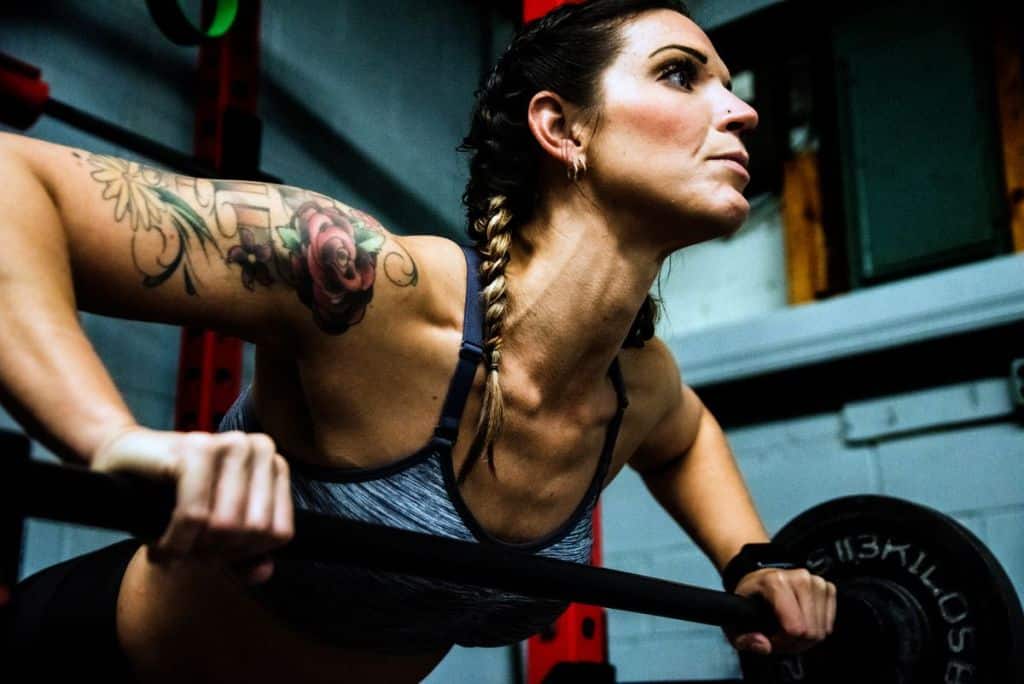
The Double Hit
Here's why menopause plus a jab is a trickier combination than either on its own. Two separate forces are pushing down on your muscle at the same time.
Force one: menopause. As oestrogen falls, a few things happen at once. You lose muscle and bone faster. Your muscles become a bit "deaf" to protein — the technical term is anabolic resistance, meaning it takes more protein to get the same muscle-building response you got in your thirties. And fat starts settling around your middle in a way it never did before. None of that is your fault or a failure of willpower. It's hormones.
Force two: the jab. On top of all that, rapid weight loss on a GLP-1 can strip lean tissue as well as fat, your appetite crushes your protein intake right when you need more of it, and you quietly start moving less. Every one of those lands harder on a menopausal body that's already fighting to hold its muscle and bone.
Two forces down, one force up
Menopause and the jab both push your muscle and bone down. Strength training is the one thing strong enough to push back.
You can't switch off menopause, and you don't need to stop the jab. You just need the force that pushes the other way.
Why This Is Actually Good News
I know that all sounds heavy, so here's the part I really want you to hold onto. The fix for the menopause muscle problem and the fix for the jab muscle problem are the exact same thing. You don't need two plans. You need one, and it works double duty.
Lifting weights and eating enough protein pushes back on menopause and on the jab at the same time. It protects your muscle, defends your bone density (which matters enormously after menopause, when the risk of osteoporosis climbs), holds your metabolism up, and keeps the shape and strength that make you feel like yourself. One habit, solving both problems. That's a rare thing in health, and it's why I get so evangelical about it.
And please don't worry about "bulking up". I hear it from almost every woman I start with, and it's a myth that's held women back for decades. You do not have the testosterone to accidentally get big. What strength training actually does for a woman in menopause is make her lean, toned, strong, and far more capable in everyday life. The women I train through this don't end up looking like bodybuilders. They end up looking like the fittest, most confident version of themselves, and carrying the shopping without a second thought.
Your Menopause + Jab Game Plan
Here's what I'd have you focus on if you walked into my studio tomorrow, a stone down on Mounjaro and wanting to do this properly.
The plan that does double duty
- Lift weights 2–3 times a week. This is the non-negotiable. Proper resistance training — real weights, not just light pink dumbbells — is the anti-ageing, anti-menopause, anti-muscle-loss intervention all in one. Nothing else comes close.
- Push your protein higher than the standard advice. Because of anabolic resistance, menopausal women need to aim for the top of the range: around 2 g per kg of bodyweight, with a solid 30–40 g at each meal to actually switch muscle-building on. On a jab that's a challenge, so lead with protein and lean on shakes and yoghurt.
- Protect your bones. Weight-bearing exercise plus enough protein supports bone density at exactly the stage of life it starts to slide. This isn't just about looks — it's about not breaking a wrist or a hip in your seventies.
- Keep your steps up. The jab quietly drops your daily movement, so put it back deliberately. A daily walk protects muscle, mood and heart, and it's the easiest win there is.
- Consider creatine. Creatine monohydrate is one of the most researched supplements there is, and it's especially valuable for women over 40 — it helps you train harder and supports muscle and even cognition. Worth a conversation.
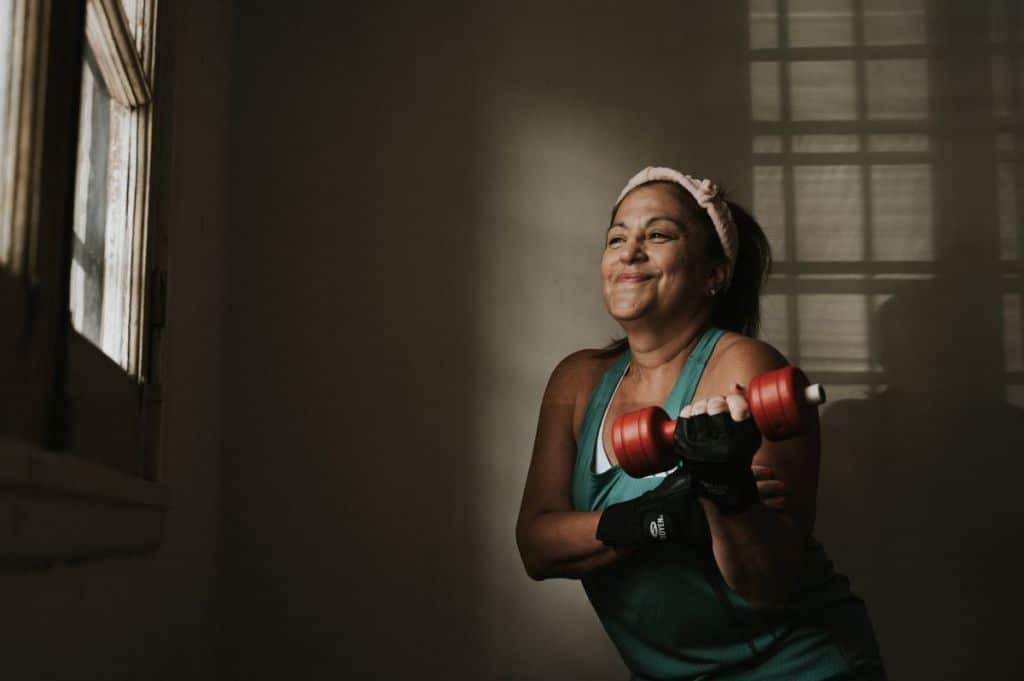
What Happens When You Stop
One more thing, because it matters most for you. Most women don't stay on these jabs forever — the cost alone sees to that. And when you come off, appetite returns and a lot of weight can come back. Now stack that on a menopausal body that was already losing muscle, and you can see the danger: regain the weight as fat, on top of muscle you never protected, and you're worse off than when you started.
The women who keep their results are the ones who used the time on the jab to build something underneath — strength, muscle, better habits, a real relationship with training. Then when they come off, they've got a stronger, higher-metabolism body that holds the result, and the confidence and routine to keep it. The jab was the head start. What you build during it is what lasts.
This Is What I Do
Coaching women through menopause is one of the things I'm proudest of in my work, and doing it alongside a weight-loss jab has become a big part of that. It's the whole reason I offer dedicated menopause coaching in Leeds — because the standard fitness advice fails women at exactly this stage, and because the results, when you get it right, are genuinely life-changing. Not just the body, but the energy, the confidence, the feeling of being strong in yourself again.
You don't have to figure this out alone, and you definitely don't have to choose between the jab and getting strong. Run them together, with a plan built for your body and your life, and you come out the far side leaner, stronger and more yourself than you've felt in years.
Quick FAQ
Why are weight-loss jabs so common in menopausal women?
Because menopause makes weight loss genuinely harder — falling oestrogen shifts fat to the middle, slows muscle maintenance and disrupts appetite. Many women have tried everything, so a drug that finally moves the scale is appealing. UK data shows jab use peaks in the 45–55 age group and is about twice as common in women as men.
Is it safe to take Mounjaro during menopause?
That's a medical question for your prescriber, and many menopausal women do use these drugs under supervision. From a training point of view, the key thing is protecting your muscle and bone while you lose weight, because menopause and rapid weight loss both work against them.
Will strength training make me bulky in menopause?
No. Women don't have the testosterone to bulk up by accident, and it's even less likely after menopause. Strength training makes you leaner, stronger, more toned and more capable — and it protects the bone density that becomes a real concern at this stage.
How much protein does a menopausal woman on a jab need?
Aim for the higher end — around 2 g per kg of bodyweight, with 30–40 g per meal — because ageing and menopause make your muscles less responsive to protein. Hitting that on a jab takes planning, so lead with protein and use shakes and yoghurt to top up.
What exercise is best during menopause?
Resistance training is the priority — it protects muscle and bone and pushes back on the changes menopause brings. Add daily walking for your heart and mood. Endless cardio alone won't protect your muscle, so make lifting the centre of your plan.
What happens to my weight if I stop the jab?
Appetite returns and weight often comes back, frequently as fat. If you built muscle and strong habits while on the medication, you've got a higher metabolism and the routine to hold your result. That's why the time on the jab is best spent building, not just waiting.
Key Takeaways
- Weight-loss jabs are most common in women aged 45–55 — right through menopause.
- Menopause and the jab both push down on muscle and bone at the same time: a genuine double hit.
- The fix for both is identical: strength training plus enough protein. One plan, two problems solved.
- Strength training won't make you bulky — it makes you lean, strong, and protects your bones.
- Push protein to the top of the range (around 2 g/kg) because menopause makes muscle less responsive.
- Use your time on the jab to build strength and habits, so your result holds when you come off.
Further Reading
- UCL Smoking and Alcohol Toolkit Study: prevalence and demographics of GLP-1 medication use for weight management in UK adults, 2026.
- Bauer J, et al. Evidence-based recommendations for optimal dietary protein intake in older people (PROT-AGE). Journal of the American Medical Directors Association, 2013.
- Resistance training and body composition in peri- and post-menopausal women: systematic review and meta-analysis, 2024.
- Look M, et al. Body composition changes during weight reduction with tirzepatide (SURMOUNT-1). Diabetes, Obesity and Metabolism, 2025.
Disclaimer: This article is general education from a personal trainer, not medical advice. GLP-1 medications like Mounjaro and Ozempic are prescription drugs, and menopause care is individual — always speak to your GP, prescriber or menopause specialist before starting, stopping or changing any treatment, or before making significant changes to how you eat and train.
Menopause + the jab? Let's do it properly.
I'll build you a strength and nutrition plan made for a menopausal body on a weight-loss jab — so you lose fat, protect your muscle and bone, and come out stronger. Leeds or online, from a 12× award-winning coach who does this every day.
Book a Free Consultation →