
Strength Training For Women Over 40: The Menopause Game-Changer
Muscle and bone start slipping away faster after 40 — and menopause pours fuel on the fire. Here's why lifting weights is the single best thing you can do about it, and exactly how to start without wrecking your joints or "getting bulky."
If you're a woman over 40 and you feel like your body has quietly changed the rules on you — you're not imagining it. The good news? There's one intervention that turns the tide better than anything else, and it's been hiding in plain sight: picking up some weights.
I coach a lot of women through their 40s, 50s and beyond — women navigating perimenopause and menopause, watching the scales creep, the energy dip, the aches arrive. Almost all of them have spent years being told to do more cardio and eat less. And almost all of them are stunned by what happens when they finally start strength training instead. This is the article I wish every one of them had read a decade earlier. No fads, no fearmongering — just what's actually happening in your body and what to do about it.
Why It All Speeds Up After 40
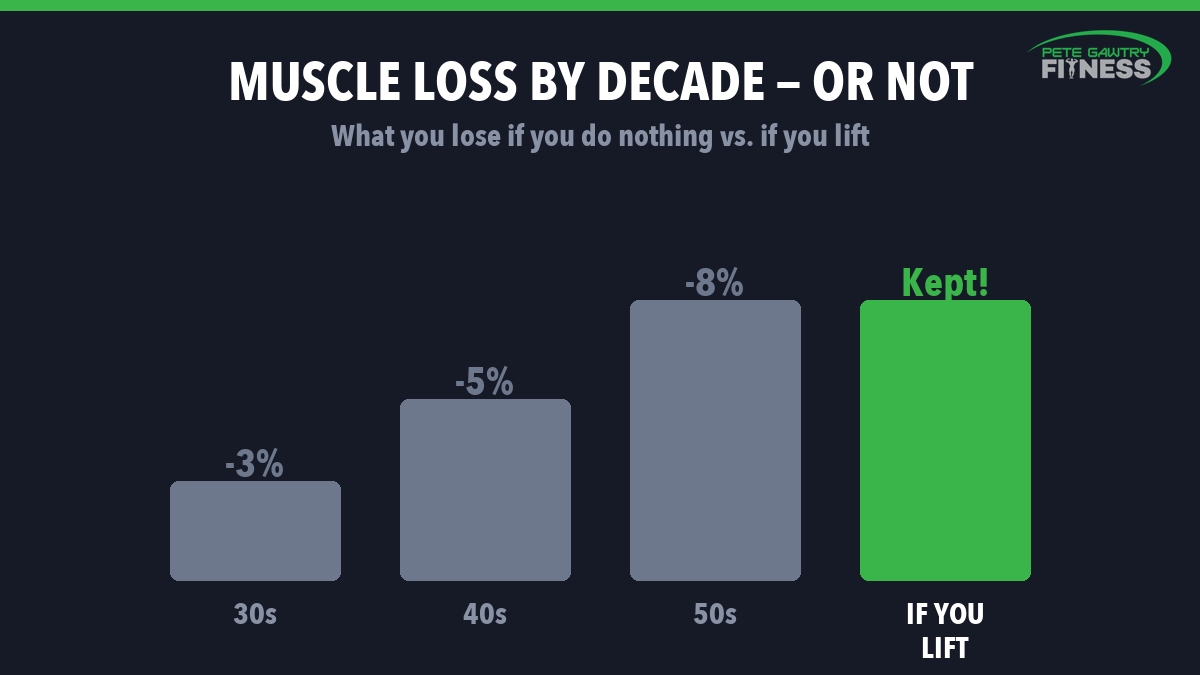
From your mid-30s onward, you start losing muscle. It's a slow drip at first — a condition called sarcopenia — and if you do nothing about it, you can lose somewhere around 3–8% of your muscle mass per decade, accelerating further after 60. Less muscle means less strength, a slower metabolism, and a body that bruises and tires more easily. It's not "just getting older." It's largely disuse, and it's reversible.
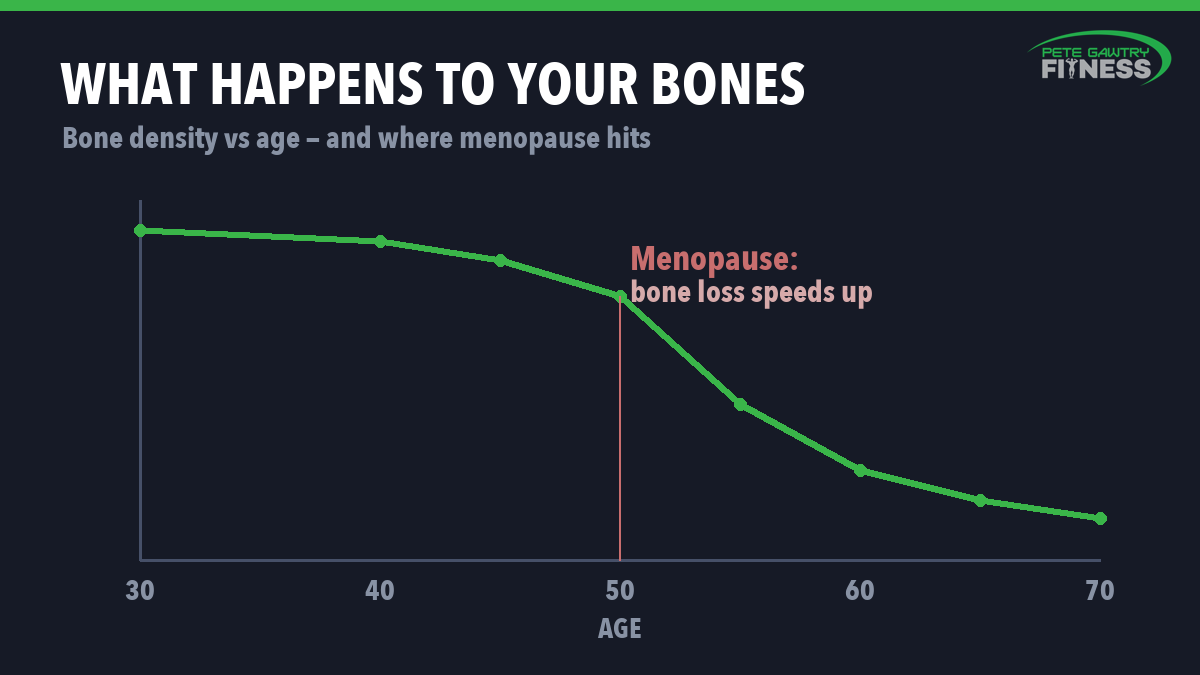
Then menopause arrives and presses the accelerator. As your ovaries wind down, oestrogen falls — and oestrogen turns out to be one of the great unsung protectors of the female body. It helps maintain muscle, it's deeply involved in keeping bone strong, and it influences where you store fat. When it drops, three things happen fast:
- Muscle loss speeds up. The hormonal buffer that helped you hold onto lean tissue is suddenly much weaker.
- Bone loss accelerates sharply. Women can lose up to 10% of their bone density in the few years around menopause — which is why osteoporosis and fracture risk climb so steeply for women in midlife.
- Fat redistributes to the middle. That stubborn change from hips-and-thighs to belly isn't a willpower failure — it's hormonal, and it carries real metabolic-health consequences.

Why Lifting Is THE Single Best Move
Here's the part that genuinely changes lives once it clicks: nearly every problem on that list above responds to the same intervention. Not a different pill for each symptom — one habit that hits all of them at once. Resistance training is the closest thing we have to a master key for the over-40 female body.
Walking and cardio are wonderful for your heart and your head, and I'd never tell you to drop them. But they don't send your body the one signal it needs most right now: this tissue is needed, keep it. Only loading your muscles and bones does that. Here's what lifting delivers:
- It protects and rebuilds muscle. Resistance training is the direct counter to sarcopenia. You can build meaningful strength and lean tissue at any age — there are women starting in their 60s and 70s who get noticeably stronger.
- It builds bone. Bone responds to load by laying down more bone. Lifting weights is one of the few proven ways to maintain — and in many cases improve — bone density and push back against osteoporosis.
- It lifts your metabolism. Muscle is metabolically active tissue. More of it means you burn more even at rest, which makes managing weight in menopause far less of an uphill battle.
- It eases symptoms and sharpens mood. Strength work is consistently linked to better sleep, reduced anxiety, steadier mood and more day-to-day energy — the very things menopause tends to chip away at.
- It manages midsection fat. Combined with sensible protein and a bit of a calorie awareness, building muscle is your best lever on that hormonal shift toward belly fat.
- It rebuilds confidence. There is something that happens when a woman deadlifts her own bodyweight or does her first proper press-up that no scale number can touch. Strong in the body becomes strong in the head.
Busting The "Lifting Makes Women Bulky" Myth
Let's kill this one properly, because it stops more women from training than anything else — and it is flat-out wrong.
Building large, bulky muscle requires a very specific combination: high levels of testosterone, a serious calorie surplus, and years of relentless, dedicated training. Women have roughly 10–15 times less testosterone than men — and after 40, with oestrogen and testosterone both lower, building muscle gets harder, not easier. You do not accidentally get bulky. It does not sneak up on you overnight from two sessions a week.
What lifting actually does to a woman's body is the opposite of the fear. Muscle is dense and compact — it takes up less room than the same weight of fat. The result that real women report, over and over, is looking leaner, tighter and more toned, not bigger. That "toned" look everyone wants? That is muscle — you can't tone a muscle you haven't built.
FACT: Without high testosterone and a calorie surplus, that's physiologically off the table. Women get leaner and more toned, not bulky — especially after 40.
FACT: Toning is just building muscle and losing a little fat over it. That takes meaningful resistance, not endless reps with tiny dumbbells.
FACT: Studies show people in their 60s, 70s and 80s gain strength and muscle. The best time to start was 20 years ago; the second best is today.
How To Actually Start
Forget the intimidating bodybuilder corner of the gym. Smart strength training for a woman over 40 is simple, joint-friendly and built on a few reliable principles. Here's how I get clients going.
The foundations that matter
- Master the compound lifts. Movements that work several muscles at once give you the most return: squats, hip hinges (deadlift-style), pushes (press-ups, chest and shoulder presses), pulls (rows) and a carry or two. A handful of these covers your whole body.
- Use progressive overload. This is the engine of all results: gradually ask your body to do a little more over time — a touch more weight, an extra rep, better control. Without it, you plateau. With it, you keep getting stronger.
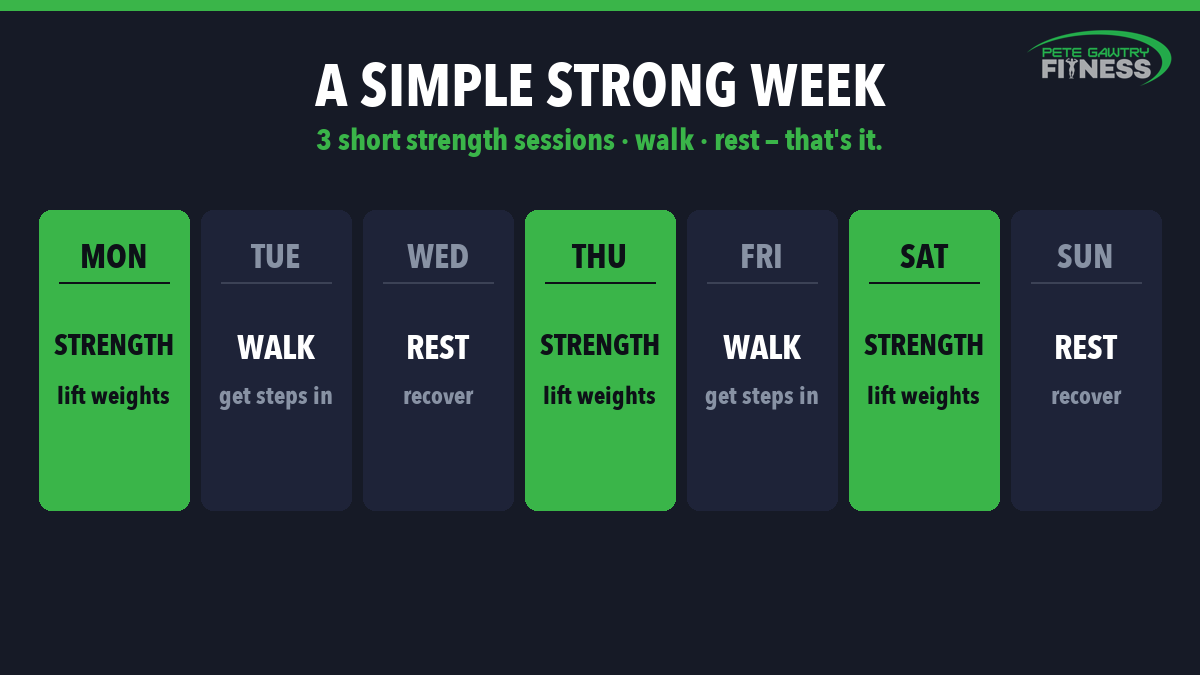
- Train 2–3 times a week. That's it. Two or three full-body sessions, with rest days between, is enough to drive real change. More isn't better here — recovery is where you actually adapt.
- Form over ego, always. A lift done well with a moderate weight beats a heavy one done badly every single time. Good technique is what makes lifting safe and joint-friendly — this is exactly where a few sessions of one-to-one coaching earns its keep, getting you confident and lifting properly from day one.
- Be joint-smart. Warm up, control the weight up and down, and pick variations that suit your body. Strength training done properly doesn't wreck knees and backs — it's one of the best things you can do to protect them.
The Protein Connection
Lifting is the signal; protein is the building material. You can train perfectly and still spin your wheels if you're not eating enough protein — and the honest truth is that most women over 40 are eating far too little of it.
Protein does the heavy lifting outside the gym: it repairs and builds the muscle you're working for, it keeps you fuller for longer (a real help with that midsection), and your body simply needs more of it as you age to get the same muscle-building effect. As a rough guide, spreading good protein sources across each meal — rather than cramming it into dinner — makes a real difference. I've gone deep on the actual numbers in my guide to how much protein you really need, and it's worth a read once you start training.
What Results To Realistically Expect
I'm not going to sell you a fantasy — that's not how I coach. But the realistic picture is genuinely exciting, because strength gains come faster than most women expect.
- First few weeks: Movements start to feel easier and more coordinated. A lot of this early jump is your nervous system learning — and it feels brilliant. Many women notice better sleep and mood early too.
- 1–3 months: Real strength climbs. Everyday life gets easier — stairs, shopping bags, picking up grandkids. Clothes often start fitting differently as the body firms up, even if the scale barely moves.
- 3–6 months and beyond: Visible changes in shape and tone, steadier energy, and the deeper wins — better bone health, a faster metabolism and a real shift in how capable and confident you feel.
One honest note: the scale is a poor judge of this journey. Muscle is denser than fat, so you can get leaner, firmer and a full dress size down while the number barely shifts. Judge it by how you look, feel, move and lift — not by one number. You can see what this looks like in real women on my results and transformations page.
Strength Training Over 40 FAQ
Is it safe to start lifting weights in my 40s, 50s or beyond?
Yes — for the vast majority of women it's not just safe, it's one of the best things you can do for your long-term health. Done with good technique and sensible progression, strength training protects your joints, bones and muscles rather than harming them. If you have a specific medical condition, check with your GP first, but age itself is not a barrier.
Will lifting weights make me bulky?
No. Building large, bulky muscle requires high testosterone, a big calorie surplus and years of dedicated training. Women have a fraction of the testosterone men do, and it gets harder to build muscle after 40, not easier. Lifting makes women look leaner and more toned, not bigger.
How many times a week should I strength train?
Two to three full-body sessions a week is ideal for most women over 40. That's enough to drive real strength, muscle and bone changes while leaving plenty of recovery time between sessions, which is where your body actually adapts.
Can strength training really help with menopause symptoms?
Yes. Resistance training is consistently linked to better sleep, improved mood, reduced anxiety, more energy and better management of weight and belly fat — all common menopause complaints. It also directly protects the muscle and bone that falling oestrogen puts at risk.
Does lifting weights help with bone density and osteoporosis?
It's one of the most effective tools we have. Bone responds to load by getting stronger, so progressively loading your skeleton through resistance training helps maintain and often improve bone density — and bone density is what osteoporosis and fragility fractures come down to. In trials, women who train show better bone density than those who do not. That is measured across groups, not promised to any one person.
I've never lifted before — where do I start?
Start with the basic compound movements: squats, hip hinges, pushes, pulls and carries, using a weight you can control with good form. Keep it simple, focus on technique, and add a little more over time. Working with a coach early on is the fastest way to build confidence and avoid bad habits.
Do I need to lift heavy weights to see results?
You need to lift enough to challenge your muscles — light dumbbells for endless reps won't cut it — but "heavy" is relative to you. The key is progressive overload: gradually doing a bit more over time. That challenge, applied consistently and safely, is what drives results.
How much protein do I actually need?
Most women over 40 eat too little protein to support muscle. As a general rule you'll want noticeably more than you're probably getting, spread across your meals rather than piled into dinner. My full guide on how much protein you really need walks through the numbers.
How long until I see results?
Strength and coordination improve within the first few weeks, with sleep and mood often lifting early too. Real strength and shape changes typically show over one to three months, with the deeper bone, metabolism and confidence benefits building from three to six months onward.
Should the scale go down if it's working?
Not necessarily, and that's a good thing. Muscle is denser than fat, so you can become leaner, firmer and smaller in your clothes while the scale barely moves. Judge your progress by how you look, feel, move and lift — not by one number on the floor.
The Bottom Line
- Muscle and bone loss accelerate after 40 — and menopause, via falling oestrogen, speeds it up sharply, raising the risk of sarcopenia and osteoporosis.
- Strength training is the single best intervention: it protects muscle and bone, lifts your metabolism, eases symptoms, improves sleep and mood, and helps manage midsection fat — all at once.
- Lifting will not make you bulky. Women get leaner and more toned, not bigger — the "bulky" fear is physiologically unfounded.
- Start simple: compound lifts, progressive overload, 2–3 sessions a week, form over ego, and joint-friendly technique.
- Pair it with enough protein, judge progress by how you feel and move rather than the scale, and give it a few months — the results are worth it.
Disclaimer: This article is for general education and is not medical advice. If you have an existing health condition, are new to exercise, or have any concerns about training through menopause, speak to your GP or a qualified professional before starting a new strength programme.
Ready to get strong through menopause & beyond?
Strength-first, no-fad coaching built around your body and this chapter of life — from an award-winning Leeds personal trainer who does this every day. Let's turn the tide together.
Start Your Menopause Coaching →