
Pete Gawtry Fitness · Nutrition · 2020
The Pete Gawtry Fitness Guide to Intermittent Fasting
Everything you need to start fasting safely — the science, the protocols and the results to expect.
Intermittent Fasting
As different fads continue to influence people on their weight loss journeys, one interesting trend has taken this area by storm. We are talking about intermittent fasting, which is a process wherein individuals alternate between periods of fasting and eating. It was the most searched weight loss-related term in 2019 and a review article in The New England Journal of Medicine discussed it elaborately. If intermittent fasting is undertaken appropriately, it can serve several purposes. As stated already, it is a great tool to lose weight. Apart from that, it can assist in the reversal of type 2 diabetes, cut down costs, and save adequate time. This guide aims to acquaint you with various concepts and rules related to intermittent fasting, so you are equipped with complete information about the trend before you embark on this journey. Note: Although intermittent fasting does offer several benefits, it is also met with substantial scepticism and criticism. One significant risk pertains to medications, particularly for diabetes, wherein there is a requirement to adapt the dosage of the medicines. It is important to consult your doctor regarding any alterations in your medications as well as general lifestyle. The purpose of this article is to guide adults suffering from different health problems, such as obesity, as they would potentially enjoy several advantages that accompany intermittent fasting. However, we strongly recommend people suffering from eating disorders such as anorexia or those who are underweight, to refrain from fasting. This rule extends to pregnant women or those who are breastfeeding as well as people aged under 18.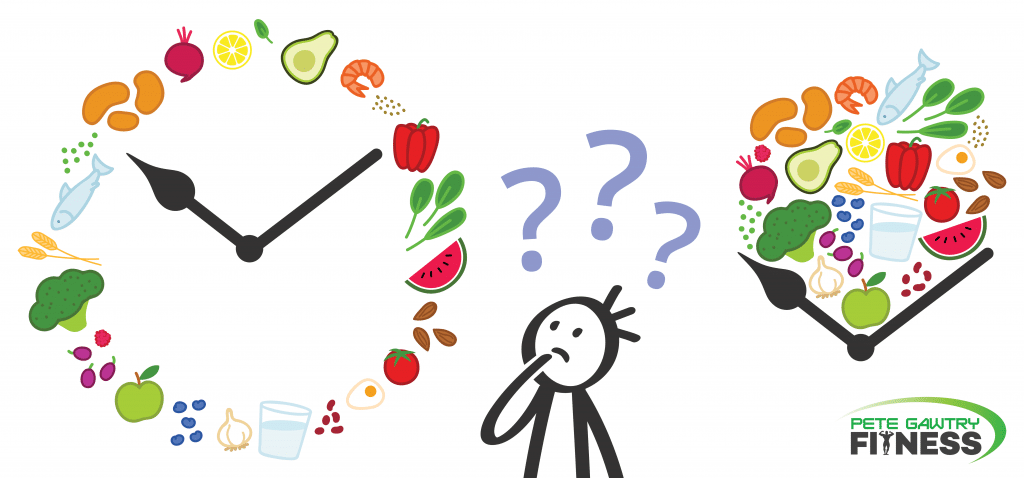
What is intermittent fasting?
As a beginner, you may confuse intermittent fasting with starvation. However, they are two distinct concepts, with the primary differentiator being control. Starvation is not determined by choice. As it is an involuntary state that we are coerced into due to our circumstances, it may cause suffering or, in extreme cases, death. Conversely, fasting is a choice to abstain from consuming food, for a variety of reasons, typically centring on health and spirituality. Fasting is undertaken by individuals who have a considerable amount of stored fat, which is enough to sustain themselves. If done appropriately, fasting should neither lead to suffering, nor death. In simple words, you can access food. However, you choose not to. The period may vary based on your convenience- a few hours or even days. One can even exceed it up to a week or more, but only under medical supervision. The initiation and the conclusion of your fast are determined only by you. In simple words, at any point that you are not consuming food, you are on a fast. Technically, you are fasting between dinner and breakfast as well (unless you engage in midnight snacking). Therefore, our lifestyle already incorporates intermittent fasting. In fact, it is an age-old intervention and is extremely effective. If you break down the term breakfast, it is nothing but “break fast.” Therefore, that is a meal which breaks your fast and this happens every day. Simply put, the English language connotes that fasting is important in our daily routine and must not be considered a punishment or as something that is unusual. So, even if you perform it for a very short period of time each day, it is still a part of your daily routine. However, most of us tend to overlook the potency of this method in positively transforming our health. Moreover, familiarizing ourselves with the concept of fasting equips us with the power of choice.Balancing eating and fasting
The most elementary principle of intermittent fasting enables our body to make use of the fat that is already stored in our body, thereby burning off some of our fat. It is crucial for you to understand that this practice is very normal and our bodies have adapted themselves to fast over short periods of time, which could be a few hours or days. This will not affect your health negatively. As most of you must be aware, our body fat is nothing but the energy from the food that we consumed, that is stored by our body. Thus, if we don’t eat our body will “eat” up the fat to obtain the required amount of energy. However, it is important to remember that we must live our life in moderation and attain the level of balance in whatever we do. This is relevant even when it comes to eating and fasting.Let us not delve into the intricacies of this process.
Whenever we consume food, a substantial amount of energy is generated in our body. Although this energy is readily usable, some of it is stored to be used by our body later. The primary hormone that is used in energy storage is insulin.

Benefits of intermittent fasting
As has been repeated throughout the article, the most commonly cited benefit of intermittent fasting is weight loss. However, we must not undermine the effectiveness of this trend by restricting its benefits merely to this. There are several other benefits that this system offers. In ancient times, the periods of fasting were commonly referred to as detoxifications or purifications, although conceptually, it is no different from intermittent fasting. That is because it was a popular belief that refraining from eating food would ensure that toxins are eliminated from the body. The health benefits associated with intermittent fasting include:- Loss of body fat
- Increased burning of fat
- A decrease in the level of insulin and sugar
- May support blood-sugar control in type 2 diabetes (worth discussing with your doctor)
- May enhance mental focus
- A higher level of energy
- May cause a rise in the growth hormone, even if only for a short period
- Can potentially enhance blood cholesterol profile
- May increase lifespan
- Through stimulation of autophagy, cellular cleansing may be activated
- Might decrease inflammation

How to practice intermittent fasting
Short Periods
Thankfully, there are no hard-and-fast rules when it comes to intermittent fasting. It is based on your discretion and you can alter the rules a little based on your convenience. Your periods of fasting may be short or long. However, if you plan on extending it beyond a few days, we strongly recommend seeking medical supervision. Typically, shorter fasts are preferred and they are performed more regularly.16:8
This particular style of intermittent fasting requires the individual to fast for 16 hours per day. A few people also refer to it as an 8-hour eating window. All your meals must be consumed within the 8-hour window and the rest of the day must be reserved for strict dieting. This is typically done every day. For instance, all your meals may be consumed between 10:00 am and 6 pm. Therefore, this includes missing dinner. A few people eat dinner and miss breakfast instead. Within the 8-hour window, you may eat two or three meals.20:4
As you may have guessed, with this method, you only have a 4-hour eating window while you fast for 20 hours of a day. Here, you can choose to eat anytime between 1:00 pm and 5:00 pm on each day, while you fast for the rest of the day. You may either consume a single heavy meal or two smaller meals.Longer fasts (>24 hours)
24-hour fasts
In this, fasting may either be from dinner to dinner or from lunch to lunch. In simpler words, if you eat dinner today, your next meal will be dinner o the following day. So, you skip two meals on the second day. In simple terms, it is also referred to as “one meal a day,” or OMAD. People practice this diet only two or three times every week.5:2 fast
Scientifically, this type of intermittent fasting was proven to have substantial merit, according to most studies. This particular type of intermittent fasting was explored in Dr Michael Mosley’s book ‘The Fast Diet.’ In this type of diet, an individual eats normally for five days and fasts on two days. On the two days of fasting, one can still eat about 500 calories per day. There are no restrictions in terms of time or the number of meals.Alternate-day fasting
This is an alternative to the aforementioned approach, wherein every day is a fasting day, where you can eat 500 calories.36-hour fasts
This approach requires the individual to fast an entire day. That is, if you eat dinner today, you do not consume anything tomorrow, and only eat again day-after morning, in the form of breakfast. That is, on one day, you skip all three meals. Technically, you are fasting for 36 hours. This method is more effective, as you do not have the choice to overeat dinner on the second day. But, the risks associated with fasting for more than 24 hours cannot be ignored.Extended fasting
If you are eager to engage in extended fasts, you must first consult your healthcare providers and make sure that such fasts will not result in health complications for you. If you want to fast for more than 48 hours, I suggest consuming a multivitamin so as to ensure that you do not suffer from micronutrient deficiency. Interestingly, a person holds the world record for fasting for 382 days (do NOT try this!). Therefore, a few people may find it easy to fast for one to two weeks. I do not encourage fasting for more than 2 weeks as it may lead to refeeding syndrome, which is a change in fluids and minerals that may arise when food is consumed after a very long period. Needless to say, it is very dangerous. If you want a bespoke meal plan doing by me personally .. click here
Free guide: The Intermittent Fasting Guide
Want all of this in one place? Grab Pete’s free 15-page Intermittent Fasting Guide — every protocol compared, who it suits, who should skip it, how to start, and the mistakes that wreck it. No email needed.
Download The Free Guide →Disclaimer: This article is general education from a personal trainer, not medical advice, and it is not a substitute for care from your own doctor. If you have a medical condition, are pregnant or breastfeeding, or take regular medication, talk to your GP before making big changes to how you eat or fast.
Want a diet that actually works?
No fads, no starvation — nutrition coaching built around your real life, from an award-winning coach.
Book Your Free Consultation →