
Pete Gawtry Fitness · Nutrition · 2018
The Ketogenic Diet & Diabetes
What low-carb eating can do for blood sugar — and how to approach it safely.
 With the increasing prevalence, cost and long-term implications of diabetes, researchers keep looking for better ways to help people manage blood sugar. Because ketogenic diets greatly restrict carbohydrate, some have asked whether it could help as a dietary approach. But is it effective and safe?
The Ketogenic Connection: Fat, Carbs and Blood Sugar
One of the first studies investigating the impact of a low-carbohydrate, ketogenic diet (LCKD) was performed by researchers at Duke University Medical Center in 2005. In their study, researchers recruited 28 overweight participants with type 2 diabetes for a 16-week intervention trial. The subjects had a mean BMI of 42.2, mean age of 56 years, and were of either African-American or Caucasian descent. In their intervention, subjects consumed a LCKD diet with the goal of eating less than 20 grams of carbohydrates per day while reducing dosages of diabetes medication. Subjects also received nutritional counseling and medication adjustment every two weeks. In the 21 subjects the successfully completed the study, scientists observed a 16% decrease in Hemoglobin Ac from baseline to week 16. [8] Subjects experienced an average decrease in body weight of 8.7 kg (19.2 lbs.). [8] Additionally, their average blood glucose levels decreased a total of 16.6% and their average triglyceride levels decreased 41.6%. [8] Overall, most subjects reduced or discontinued their diabetes medications. The researchers concluded that “the LCKD can be very effective at lowering blood glucose.” [8] However, in order for the most effective outcomes, patients on LCKD should consult their doctor or someone capable of adjusting their medication. [8] Key Takeaways: Adhering to a very low carbohydrate ketogenic diet (LCKD) can reduce key markers related to type II diabetes in overweight, male subjects such as BMI, body weight, and blood levels of glucose, triglycerides, and hemoglobin A1C.
What this suggests: In this study, a ketogenic diet was linked to lower blood-sugar markers and, for some people, less medication — but every change was made under medical supervision. Any change to your own diet or medication is a conversation for your doctor.
Key Takeaways: Adhering to a very low carbohydrate ketogenic diet (LCKD) can reduce key markers related to type II diabetes in overweight, male subjects such as BMI, body weight, and blood levels of glucose, triglycerides, and hemoglobin A1C.
What this suggests: In this study, a ketogenic diet was linked to lower blood-sugar markers and, for some people, less medication — but every change was made under medical supervision. Any change to your own diet or medication is a conversation for your doctor.
Ketogenic vs. Low-Calorie Diet for Type II Diabetes
In a 24-week long intervention study, researchers recruited 84 obese subjects with type 2 diabetes and randomly divided them into two groups. The first group of 42 received a low-glycemic diet with a 500 calorie/day deficit. The second group ate a very low carbohydrate ketogenic diet with less than 20 grams of carbohydrates per day without calorie restriction. Both groups were also underwent identical exercise regimens and had same access to nutritional coaching and group meetings. Researchers measured key diabetes markers including fasting glucose, body mass index (BMI), body weight (kg) and hemoglobin A1c at the beginning of the study, the midpoint (week 12), and the end (week 24). Both groups experienced no notable adverse effects in their health. In the 29 subjects who successfully completed the calorie-restricted diet, researchers observed an average 16% reduction in fasting glucose, 2.7 reduction in BMI, and loss of 6.9 kg of bodyweight. [9] However, in the 21 subjects that successfully completed the very-low carbohydrate ketogenic diet, subjects experienced an average 19.9% reduction in fasting glucose, 3.9 decrease in BMI, and loss of 11.1 kg of bodyweight. [9] When compared to the calorie-restrict diet, the subjects who underwent the ketogenic diet experienced a reduction three times greater in hemoglobin A1C (1.5% vs. 0.5%). [9] In addition to observing greater improvements in diabetes-related markers, researchers observed a greater reduction in medication usage in subjects on the ketogenic diet. Thus, due to their overall findings, the researchers stated that “Lifestyle modification using low carbohydrate interventions is effective for improving type 2 diabetes markers.” [9]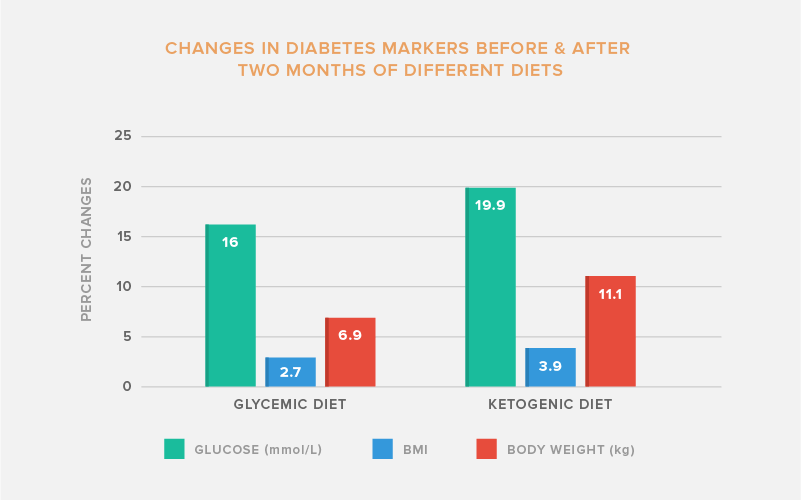 Another study sought to broaden the scope of the ketogenic diet’s impact on weight and symptoms of diabetes by examining a large, non-white patient population. In 2012, researchers in the United Arab Emirates recruited 363 overweight and obese participants for a 24 week intervention trial.
102 of these subjects had type 2 diabetes. The subjects were divided into two groups: one consumed a low-calorie diet (LCD) while the other consumed a low-carbohydrate ketogenic diet (LCKD). Both also underwent equal exercise and nutritional training. Every four weeks, the researchers measured levels of waist circumference, blood glucose level, levels of glycosylated hemoglobin, and triglycerides.
At the conclusion of the intervention, both groups had improved in all metrics but “these changes were more significant in subjects who were on the LCKD as compared with those on the LCD.” [10]. As a result, the researchers supported the study outlined above and concluded that their “…study shows the beneficial effects of a ketogenic diet over the conventional LCD in obese diabetic subjects.” [10]
However, because the drop in glucose can be very sudden, it is very important to monitor blood glucose when using the ketogenic diet.
Key takeaways: Compared with a calorie-restricted diet, a very-low-carbohydrate ketogenic diet was linked to greater improvements in blood-sugar markers associated with type 2 diabetes in obese subjects.
What this suggests: For some people with type 2 diabetes, a strict ketogenic diet was linked to better blood-sugar markers in these studies. Whether it is right for you is a question for your doctor or dietitian.
Another study sought to broaden the scope of the ketogenic diet’s impact on weight and symptoms of diabetes by examining a large, non-white patient population. In 2012, researchers in the United Arab Emirates recruited 363 overweight and obese participants for a 24 week intervention trial.
102 of these subjects had type 2 diabetes. The subjects were divided into two groups: one consumed a low-calorie diet (LCD) while the other consumed a low-carbohydrate ketogenic diet (LCKD). Both also underwent equal exercise and nutritional training. Every four weeks, the researchers measured levels of waist circumference, blood glucose level, levels of glycosylated hemoglobin, and triglycerides.
At the conclusion of the intervention, both groups had improved in all metrics but “these changes were more significant in subjects who were on the LCKD as compared with those on the LCD.” [10]. As a result, the researchers supported the study outlined above and concluded that their “…study shows the beneficial effects of a ketogenic diet over the conventional LCD in obese diabetic subjects.” [10]
However, because the drop in glucose can be very sudden, it is very important to monitor blood glucose when using the ketogenic diet.
Key takeaways: Compared with a calorie-restricted diet, a very-low-carbohydrate ketogenic diet was linked to greater improvements in blood-sugar markers associated with type 2 diabetes in obese subjects.
What this suggests: For some people with type 2 diabetes, a strict ketogenic diet was linked to better blood-sugar markers in these studies. Whether it is right for you is a question for your doctor or dietitian.
High-Fat Diets and Blood Sugar: What the Studies Found
Because ketogenic diets are usually high in saturated fats, many people assume they are unhealthy. The research suggests very-low-carbohydrate diets were associated with better blood-sugar markers in overweight and obese people with type 2 diabetes. But how do ketogenic diets affect blood-sugar markers in people who do not have diabetes? To investigate this further, researchers recruited 83 non-diabetic subjects with an average age of 48 and BMI of 33. They randomly divided them in one of three equal-calorie diets for 8 weeks. The first one, called the Very Low Fat diet (VLD) consisted of 70% carbohydrates, 10% fat, and 20% protein. The second diet, called the high unsaturated fat diet (HUF) consisted of 50% carbohydrates, 30% fat, and 20% proteins. In this diet, the bulk of the fat calories (about 90%) were from unsaturated fats. The third diet, called the very low carbohydrate diets (VLCARB), consisted of 4% carbohydrates, 61% fat, and 20% proteins. About 20% of the fats in this diet were saturated. All subjects also participated in a weight-loss exercise regimen and support from dieticians. Additionally, at the end of the eight weeks, all subjects underwent the same “weight-maintenance” diet and exercise regimen for four weeks. At the end of this 12 week study, scientists observed similar loss in body fat and overall body weight in all three diets. However, they noted that the VLCARB ketogenic diet was “more effective in improving tracylglycerols, HDL cholesterol, fasting and post-meal glucose and insulin concentrations. More specifically, triacylglycerols decreased by 39.9% in VLCARB subjects, 4.0% in VLF subjects, and 9.6% in HUF subjects. [11] Insulin levels decreased by 33.6% in VLCARB subjects, decreased by 18.7 % in HUF subjects, and actually increased by 15.1 % in VLD subjects. [11] Key takeaways: In these studies, ketogenic diets were not linked to a higher risk of overweight subjects developing type 2 diabetes or cardiovascular problems, and were associated with lower triglycerides and insulin levels than other equal-calorie diets.
What this suggests: Some people with high triglycerides, insulin or post-meal glucose may find low-carb eating worth discussing with their doctor — and cholesterol is worth monitoring on any high-fat diet.
Key takeaways: In these studies, ketogenic diets were not linked to a higher risk of overweight subjects developing type 2 diabetes or cardiovascular problems, and were associated with lower triglycerides and insulin levels than other equal-calorie diets.
What this suggests: Some people with high triglycerides, insulin or post-meal glucose may find low-carb eating worth discussing with their doctor — and cholesterol is worth monitoring on any high-fat diet.
Low-Carb Diets and Type I Diabetes: Is there a Connection?
The bulk of studies examining the ketogenic diet focus on overweight or obese subjects with type 2 diabetes. But how does low-carb eating fit for people with type 1 diabetes? Unfortunately, there are no formal research studies examining the impact of the ketogenic diet on glycemic control in type I diabetics. However, a study from 2012 examined the effects of a reduced carbohydrate diet. In it, researchers recruited 48 subjects with an average age of 24 years and had them consume a reduced carbohydrate diet ( For those that adhered to a reduced carbohydrate diet, their percentage of hemoglobin A1c (HbA1c) was 7.7%, 6.4%, and 6.4% at baseline, 3 months, and 4 years respectively. [12] This indicates that there was a lower serum glucose concentration in the blood. Key takeaways: No studies on the effects of a full ketogenic diet in people with type 1 diabetes have been performed. One study suggests a reduced-carbohydrate diet was associated with a lower percentage of HbA1c in the blood.
Important: Type 1 diabetes is insulin-dependent, and low-carb or ketogenic eating can be dangerous without specialist supervision because of the risk of hypos and ketoacidosis. Never change your diet or insulin on your own — if you are curious, talk to your diabetes team first.
Key takeaways: No studies on the effects of a full ketogenic diet in people with type 1 diabetes have been performed. One study suggests a reduced-carbohydrate diet was associated with a lower percentage of HbA1c in the blood.
Important: Type 1 diabetes is insulin-dependent, and low-carb or ketogenic eating can be dangerous without specialist supervision because of the risk of hypos and ketoacidosis. Never change your diet or insulin on your own — if you are curious, talk to your diabetes team first.
Wrapping it up: Is the Ketogenic Diet right for you?
The ketogenic diet gets a lot of flak because it is a fairly extreme dietary regimen that challenges the conventional view of “high carbs, low fat”. That said, a growing body of research suggests very-low-carbohydrate eating can be a reasonable option to explore for blood-sugar management, with your doctor’s input. Several studies have found low-carb, ketogenic diets improved blood-sugar markers more than low-calorie diets did. In a review of the literature on carbohydrate restriction, a group of 26 leading researchers concluded that there is “…good evidence for low-carbohydrate diets as a first dietary approach for type 2 diabetes, and as a useful complement to medication in type 1. They represent the best-documented, least controversial results.” [13] Low-carb eating is one tool some people use to help with blood-sugar control. Either way, it is important to base it on healthy fats and a variety of whole foods. At the end of the day, we only want to provide you with the evidence – and for some people a ketogenic approach may be worth exploring as part of a blood-sugar plan. Consider talking to your doctor and dietitian to see if it’s a good fit for you.Disclaimer: This article is general education from a personal trainer, not medical advice, and it is not a substitute for care from your own doctor. Type 1 diabetes is insulin-dependent, and low-carb eating can be dangerous without specialist supervision — never change your diet, insulin or any medication without talking to your GP or diabetes team first.
Want a diet that actually works?
No fads, no starvation — nutrition coaching built around your real life, from an award-winning coach.
Book Your Free Consultation →