
Creatine For Women Over 40: The Honest Guide
Creatine is the one supplement I actually rate — the evidence behind it is genuinely strong. But the pink "for her" tubs are a rip-off, most of the scare stories are nonsense, and it does nothing on its own. Here's the honest version.
I'm the last person to get excited about a supplement. Most of them are expensive urine. Creatine is the exception, and if you're a woman over 40, it might be the one tub in the shop worth your money.
Let me set my stall out. I spend most of my life telling people to stop wasting money on supplements. Fat burners, detox teas, greens powders, collagen, the lot — nearly all of it is marketing wrapped around a pot of nothing. So when I tell you creatine is worth it, understand that it's coming from someone who says no to almost everything else.
Creatine monohydrate is one of the most studied supplements on the planet. Hundreds of trials, decades of use, and a safety record that's about as clean as it gets. That's rare. And right now it's having a proper moment with women — Forbes ran a piece in June 2026 describing creatine as having "a major moment with women", and the numbers back it up: one research review noted creatine sales jumped by around 120% between 2021 and 2022 as women in particular started taking it seriously.
So this is me being straight with you, the way I'd be in the studio. What creatine genuinely does, what it doesn't, why you absolutely do not need a special women's version, and the honest catch that the supplement companies would rather you didn't hear.
Why Creatine's Suddenly Everywhere
For thirty years creatine was seen as a "blokes at the gym" thing — something teenage lads took to get bigger. A lot of women avoided it because they thought it would make them bulky or bloated, or they simply assumed it wasn't for them. That's changed, and for good reason.
What's shifted is the research. We now have a decent body of evidence that creatine does useful things beyond just helping you lift a bit more — and several of those things matter more to a woman over 40 than to anyone else. As oestrogen falls through the perimenopause and menopause, women lose muscle and bone faster, energy dips, and mood and sleep can take a hit. It turns out creatine plays into several of those areas, which is exactly why the science community, and now the press, have started paying attention. A widely covered piece in ScienceDaily in May 2026 pulled together the growing evidence on creatine specifically for women through midlife.
The problem is that the moment something gets popular, the marketing machine moves in. And the first thing it did was slap the word "women's" on the label and put the price up. So before we go any further, let's kill that one.
Creatine: myths vs facts
Five things you've probably been told about creatine, and what the research actually says. Most of the scare stories fall apart the moment you look.
Same powder, five myths. The only decision that matters is buying plain creatine monohydrate and actually taking it every day.
You Do Not Need A "Women's" Creatine
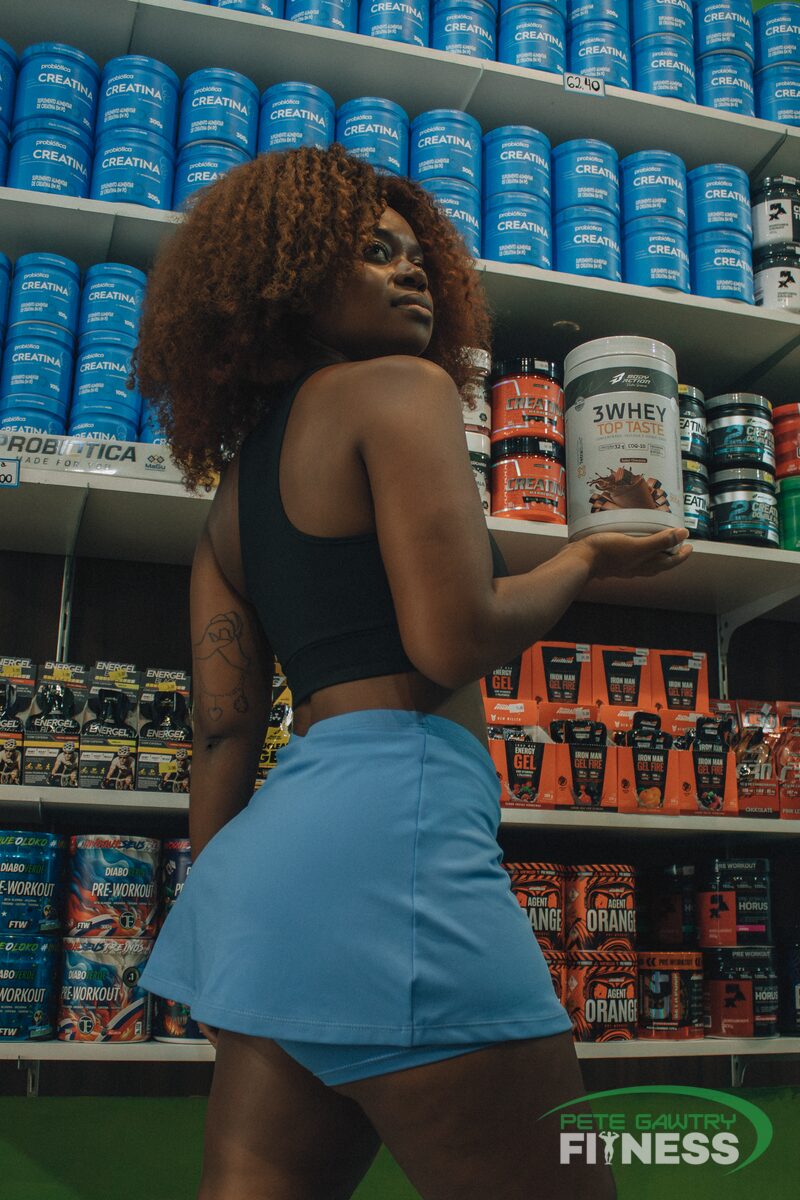
Walk into any health shop or scroll any supplement site and you'll now find creatine marketed specifically at women. Pastel packaging, words like "toning" and "wellness", often bundled with collagen or "beauty" ingredients, and almost always a higher price per gram than the plain stuff sat on the shelf next to it. I want to save you the money, so here it is plainly: there is no such thing as a women's creatine.
Creatine monohydrate is a single, simple molecule. It is exactly the same whether it's aimed at a 19-year-old rugby player or a 52-year-old woman in perimenopause. Your muscles don't read the label. A woman's body handles creatine the same way a man's does — the biochemistry is identical. The "for her" version is the same powder in prettier packaging with a markup, and often a smaller serving so it looks gentler.
You'll sometimes see "Creapure" on a label — that's just a German-made brand of monohydrate with tight quality control. Perfectly good, and worth it for the peace of mind if it's only a little dearer, but it's still plain monohydrate. That's the whole game. Don't overthink it.
What It Actually Does
Right, the good part. Here's what creatine genuinely does, in plain English.
Your muscles run on a fuel called ATP for short, hard efforts — picking up something heavy, standing up out of a chair with force, climbing stairs quickly. Creatine helps your muscles recycle that fuel faster. In practice that means you can do a rep or two more, or handle slightly more weight, before you're spent. It's not a stimulant and you won't feel a buzz. It just quietly raises your ceiling in the gym.
That sounds small. It isn't, because those extra reps add up over months into more muscle and more strength than you'd have got otherwise. Creatine doesn't build the muscle itself — your training and your protein do that — it lets you train hard enough to earn more of it. For a woman over 40 trying to hold onto muscle against the tide of falling oestrogen, that edge is genuinely useful.
Then there's the newer, more interesting research, the stuff driving all the headlines. Because your brain also uses a lot of energy, creatine has been studied for things well beyond the gym, and several of them line up neatly with what happens in menopause:
- Muscle and strength. This is the best-established benefit by miles, and it's amplified when oestrogen drops and muscle gets harder to keep.
- Bone. Creatine alongside resistance training has shown promise for supporting bone health in older women — important when the risk of osteoporosis climbs after menopause. The training is doing the heavy lifting here; creatine is a supporting act.
- Brain and mood. Some studies suggest creatine may help with mental tiredness, mood and thinking, particularly when you're sleep-deprived or stressed — which describes a lot of women in midlife. This research is younger and less settled than the muscle side, so treat it as promising rather than proven.
The "Bloating" Myth, Explained Properly
This is the one that puts the most women off, so it's worth doing properly. When you start creatine, you might see the scale go up by a pound or two in the first few weeks. That is real, and it's the seed of truth the whole bloating myth grows from. But it is not fat, and it is not the puffy, up-a-dress-size bloating people imagine.
Creatine pulls a little extra water into your muscle cells — inside the muscle, not under your skin. That's completely different from the bloating you get from, say, too much salt or your cycle, which is fluid sitting in the tissue just beneath the skin. Water inside the muscle actually makes the muscle look and feel a touch fuller and firmer, not softer. So the scale might nudge up a kilo, while your body looks the same or slightly better. It's the opposite of getting fatter.
The myth: "Creatine made me gain weight and get bloated."
The reality: A small, one-off rise in the scale from water stored inside the muscle, not fat and not under-the-skin bloat. It levels off within a few weeks and your clothes fit the same. If the scale spooks you, weigh less often — the number is measuring water, not progress lost.
I always tell clients this before they start, because if you don't know it's coming, a two-pound jump in week one can scare you off something genuinely worth taking. Now you know. It's water, it's in the muscle, it's fine.
The Hair-Loss Scare Traces To One Study Of 20 Men
You may have seen it claimed online that creatine causes hair loss or thinning — a real worry for women, understandably. So let's follow it back to where it actually comes from, because the trail is short and it doesn't lead anywhere.
The entire scare rests on a single 2009 study of 20 young male rugby players in South Africa. That study did not measure hair loss at all. It measured a hormone called DHT, which is linked to male-pattern baldness in men who are genetically prone to it, and found DHT rose in the creatine group. Nobody's hair was counted. Nobody went bald. It was one small study, in 20 men, measuring a hormone and not a hair, and for fifteen years nobody managed to replicate even that.
Then in 2025 a proper test finally happened: a 12-week randomised controlled trial actually looking at the question found no meaningful difference in that hormone between the creatine group and the placebo group. So the one domino the whole myth was balanced on has now wobbled too. There is no good evidence that creatine causes hair loss in anyone, and certainly not in women, who have a completely different hormonal picture to those 20 rugby lads in the first place.
"But Doesn't It Hurt Your Kidneys?"
The other common worry. It comes from a genuine but misread fact, so it's worth understanding rather than just waving away.
When doctors check your kidney function with a blood test, one of the markers they look at is creatinine — a normal waste product your body makes from creatine. When you supplement creatine, your creatinine can read slightly higher, simply because there's more creatine in the system to break down. A doctor who doesn't know you take it might see that number and raise an eyebrow. But a higher creatinine reading caused by supplementing is not the same thing as kidney damage. It's the difference between a full postbox and a broken letterbox — the number's up, but nothing's wrong.
In people with healthy kidneys, decades of research have found no evidence that creatine at sensible doses harms them. The one sensible action: if you're due a kidney blood test, mention to your GP that you take creatine so they can read the result correctly.
Not Everyone Responds — And That's Normal
Here's a bit of honesty you won't get from a supplement company. Roughly 20 to 30% of people are what's called "non-responders" — their muscles are already fairly saturated with creatine from their diet (it's found in red meat and fish), so topping up does little extra for them. If you eat a lot of meat, you may notice less. If you eat little or no meat — and plenty of women over 40 have cut back — you're likely to notice more, because you were starting from a lower baseline.
That's not a reason to avoid it. It's a reason to be realistic. Creatine is cheap, so it's worth a proper 8-to-12-week trial to see if you're a responder. But if a friend raves about it and you feel nothing dramatic, you're not doing it wrong — you might just be one of the people who was already topped up.
How To Actually Take It
This is the easiest part of the whole article. There's no protocol, no cycling, no clever timing. Here's everything you need to do.
One scoop, the whole truth
Everything creatine is, and everything it isn't, on one card. If you remember nothing else, remember the green circle.
The left column only happens if you're lifting and eating enough protein. That's the catch the tubs don't print on the label.
Your creatine routine, start to finish
- Buy plain creatine monohydrate. Just that on the label. Powder is cheapest; capsules are fine if you prefer, just dearer.
- Take 3–5g a day, every day. One small scoop. A slightly smaller frame can sit at the 3g end; 5g is the standard and does no harm.
- Any time of day. With your morning coffee, in a shake, stirred into water, with food or without. It doesn't matter, because it works by building up in the muscle over weeks. Pick whatever time you'll actually remember.
- Skip the loading phase. You can take 20g a day for a week to fill up faster, but there's no need. 5g daily gets you to the same place in three to four weeks, with less chance of an upset stomach.
- Take it every day, including rest days. It's not a pre-workout. Consistency is the whole job, so don't only take it on gym days.
- Give it 8–12 weeks. The effect is subtle and cumulative — a bit more in the tank, session after session. Don't expect to feel anything on day one.
The Honest Catch: It's The Cherry, Not The Cake
Now the part the supplement industry would rather I skipped. Creatine works. But it only works if the rest of your life is already in place. It's the cherry on top of the cake — and if there's no cake, a cherry on a plate is just a cherry.
Here's what I mean. Creatine helps you get a bit more out of your training. If you're not training, there's nothing for it to help. It supports you holding muscle, but only if you're eating enough protein to have muscle to hold and lifting to give your body a reason to keep it. Take creatine while eating badly and never picking up a weight, and you'll get precisely nothing for your money except a slightly fuller-looking muscle you can't see under everything else.
I see this constantly. Someone reads a glowing article about creatine, orders a tub, takes it religiously, and three months later wonders why nothing's changed. It's because they bought the topping and skipped the meal. The things that actually change your body over 40 are dull and they're free: lifting weights two or three times a week, eating enough protein, walking, and sleeping. Get those going first. Then creatine is a genuinely worthwhile few pounds a month that squeezes a bit more out of the work you're already doing.
Quick FAQ
Is creatine safe for women over 40?
For women with healthy kidneys, creatine monohydrate has a strong safety record across decades of research. It's one of the most studied supplements there is. If you have kidney disease or another medical condition, check with your GP first — and if you're due a kidney blood test, mention that you take it, since it can nudge one of the readings up harmlessly.
Do I need a special "creatine for women"?
No. There is no meaningful difference between "women's" creatine and any other creatine monohydrate — the molecule is identical and your body handles it the same. The pink, "toning" or "beauty" versions are the same powder at a higher price. Buy plain monohydrate.
Will creatine make me bloated or gain weight?
You may see the scale rise a pound or two in the first few weeks, but it's water stored inside your muscle, not fat and not the puffy bloat under your skin. It actually makes muscle look a little fuller, and it levels off quickly. If the number worries you, just weigh yourself less often.
Does creatine cause hair loss in women?
There's no good evidence that it does. The scare comes from a single 2009 study of 20 male rugby players that measured a hormone, not hair loss, and it hasn't been backed up since — a 2025 controlled trial looked directly for the effect and found no difference. Women also have a very different hormonal picture to those men in the first place.
How much creatine should a woman take, and when?
3 to 5 grams a day, every day, taken at any time that suits you. You don't need a loading phase and timing around your workout doesn't matter, because creatine works by building up in the muscle over a few weeks. Consistency is the only rule.
Does creatine help with menopause symptoms?
Its clearest benefit is helping you hold muscle and strength, which matters more as oestrogen falls. There's promising early research on bone, mood and mental tiredness too, but it's less settled than the muscle evidence. Take it to support your training, and treat any wider benefit as a bonus rather than a treatment — and see your GP for genuine menopause symptoms.
Is creatine worth it if I don't lift weights?
Honestly, not really. Creatine helps you get more out of resistance training, so without the training there's very little for it to do. Get your lifting and protein in place first, then add creatine to squeeze a bit more from the work you're already doing.
How long until creatine works?
Give it 8 to 12 weeks. The effect is subtle and builds over time — slightly more in the tank each session, adding up to more strength and muscle over months. You won't feel anything dramatic on the first day, and that's completely normal.
Key Takeaways
- Creatine monohydrate is the rare supplement with genuinely strong evidence — and it's especially useful for women over 40.
- You do not need a "women's" version. Monohydrate is monohydrate; the pink tubs are the same powder at a higher price.
- Dose is 3–5g a day, every day, any time. No loading phase, no timing tricks, roughly 10p a serving.
- The early scale bump is water stored inside the muscle, not fat and not under-the-skin bloat.
- The hair-loss fear traces to one 2009 study of 20 men that measured a hormone, not hair — and a 2025 trial found no effect.
- A higher creatinine blood reading isn't kidney damage; in healthy kidneys creatine is well tolerated. Tell your GP you take it before a kidney test.
- Around 20–30% of people are non-responders, often big meat-eaters — that's normal, not a mistake.
- It's the cherry, not the cake. Lift, eat protein and sleep first; add creatine once the foundation's there.
Further Reading
- Smith-Ryan AE, et al. Creatine supplementation in women's health: a lifespan perspective. Nutrients, 2021.
- Antonio J, et al. Common questions and misconceptions about creatine supplementation: what does the scientific evidence really show? Journal of the International Society of Sports Nutrition, 2021.
- Candow DG, et al. Creatine supplementation and aging musculoskeletal health, including bone and post-menopausal considerations. Endocrine / Nutrients reviews, 2019–2023.
- Review on rising creatine use and sales among women (noting the ~120% increase in sales, 2021–2022). PMC12086928, 2025.
- 12-week randomised controlled trial of creatine and DHT/androgen markers finding no significant difference vs placebo. PMC12020143, 2025.
- Van der Merwe J, et al. Three weeks of creatine monohydrate supplementation affects dihydrotestosterone to testosterone ratio in rugby players (the 2009 study behind the hair-loss claim). Clinical Journal of Sport Medicine, 2009.
- Forbes (June 2026): coverage of creatine's "major moment with women"; ScienceDaily (May 2026): the evidence for creatine in women through midlife.
Disclaimer: This article is general education from a personal trainer, not medical advice. Creatine is well studied and well tolerated in healthy adults, but if you have kidney disease or any other medical condition, are pregnant or breastfeeding, or take regular medication, speak to your GP or pharmacist before starting any supplement. If you're due a blood test, tell whoever's ordering it that you take creatine, as it can affect the creatinine reading. Nothing here is a treatment for menopause symptoms, low mood or any medical condition — see your doctor for those.
Want the cake, not just the cherry?
Creatine helps — but only on top of the right training and food. I'll build you a simple strength and nutrition plan that actually changes your body, and creatine becomes the easy bit. Training in Leeds or online across the UK, from a 12× award-winning coach.
Book a Free Consultation →