
Lifting Weights in Your 40s and 50s
Why it’s the most important thing you can do for your body, your mind and the next 30 years of your life — from a 53-year-old PT who’s in better shape now than at 30.
I’m 53. I look better, feel better and move better today than I did at 30 — and the single biggest reason is that I never stopped lifting weights.
I see the opposite story every week. Men and women in their 40s and 50s walking into my Leeds studio who’ve been sold the same lie for decades: that getting weaker, softer, more tired and more anxious is “just what happens.” It isn’t. The body you end up with at 60, 70 and beyond is shaped, almost entirely, by what you do in the decade you’re in right now. And nothing — nothing — rewrites that future like picking up a barbell.
This is the most comprehensive case I can make for lifting weights in your 40s and 50s. Every benefit I can think of, why this decade is the make-or-break window, and exactly how to start if you haven’t already.
Why Your 40s and 50s Are The Make-or-Break Decade
From around 30, the average inactive adult loses 3–8% of muscle every decade. By the time you hit your 40s and 50s the slide quietly accelerates: muscle goes, bone thins, hormones shift, the metabolism slows, and the body starts laying down fat in places it never used to. Most people don’t notice it as a daily event. They notice it as “suddenly” getting out of breath on stairs at 47, “suddenly” struggling to lose half a stone at 52, “suddenly” aching the day after a bit of gardening.
The brutal truth: this is not ageing. This is disuse. And the 40s and 50s are the decade where you can still reverse virtually all of it.
Start lifting now and you can build back the muscle and bone you’ve already lost, restart your metabolism, settle your hormones, and walk into your 60s and 70s strong, lean and independent. Wait another ten years and you’re still able to do it — the body responds at any age — but you’ll have given away muscle, bone and ground you didn’t need to.
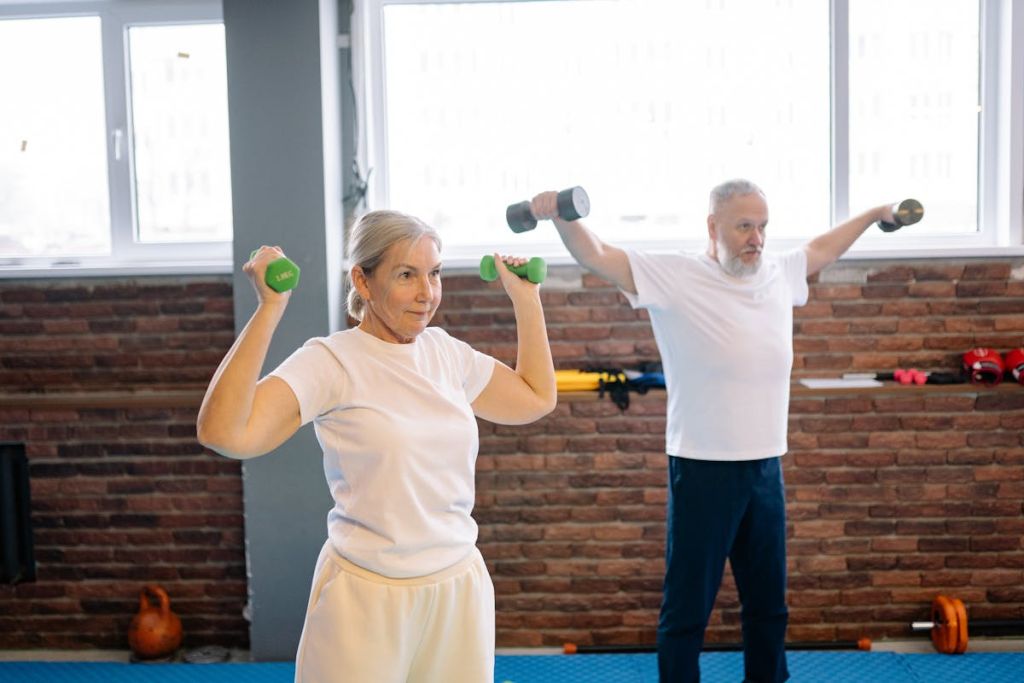
Every Benefit of Lifting Weights in Your 40s and 50s
You’ll see “ten reasons” lists for this all over the internet. Honestly, ten doesn’t come close. Here is the full case — every benefit I can put my hand on after coaching this age group for over a decade, broken down so you can see where each one bites.
For the body you live in every day
- Reverses sarcopenia. Muscle loss after 40 is not destiny — resistance training rebuilds lean tissue at any age, even into your 80s and 90s.
- Restarts your metabolism. More muscle means more calories burned 24/7. You stop fighting your own body to lose half a stone.
- Changes body composition, not just weight. Two people the same weight can look completely different. Lifting reshapes you — firmer arms, tighter waist, fuller shoulders, lifted glutes — in a way no diet alone can.
- Builds bone density. Loading the skeleton signals it to lay down new bone, directly fighting osteoporosis — the cause of the hip and spine fractures that ruin so many later lives.
- Strengthens joints, tendons and connective tissue. Lifting with good form does the opposite of “wreck your knees” — it’s used in clinics worldwide to treat and prevent joint pain.
- Fixes posture and stops back pain. A strong back and core pull you upright. Most desk-job aches in your 40s are weak-muscle problems, not spine problems.
- Improves balance and prevents falls. The leading cause of injury death in older adults is falls. Stronger legs and core dramatically cut that risk — and the work starts now, not at 75.
- Better mobility and flexibility. Done properly, lifting takes joints through full ranges under load — you finish more mobile, not less.
- More energy. Counter-intuitive but real: people who train have more energy in daily life, not less. Strong bodies do everyday tasks at a lower percentage of their max.
- Better sleep. Lifters fall asleep faster and sleep more deeply — and good sleep underpins every other thing on this list.
For your long-term health
- Cuts type 2 diabetes risk. Muscle is the body’s biggest sink for blood sugar. More muscle = better insulin sensitivity = lower diabetes risk.
- Lowers cardiovascular risk. Lifting improves blood pressure, cholesterol profile and resting heart rate — and the strongest people have the lowest cardiovascular mortality.
- Protects against obesity. Carrying functional muscle makes it physiologically harder to gain and keep fat, especially the dangerous visceral kind around the organs.
- Reduces all-cause mortality. People who strength train regularly are significantly less likely to die from anything in any given year — the effect is large and consistent across studies.
- Stronger immune system. Muscle helps regulate inflammation and provides a protein reservoir your body draws on when fighting illness or recovering from injury.
- Faster recovery from illness and surgery. Strong, muscular 50-year-olds bounce back from operations and infections far better than weak ones. This isn’t vanity — it’s biological resilience.
- Some cancers less likely. Evidence is building that regular resistance training is associated with lower risk and better outcomes in several common cancers.
- Better gut and metabolic health. The metabolic environment that comes with regular training — lower inflammation, better blood sugar, more movement — supports a healthier microbiome too.
For your hormones — men and women
- Men: protects testosterone. Testosterone falls 1–2% a year after 30 in inactive men. Heavy resistance training is one of the most reliable natural ways to support healthy levels and the things that depend on them — drive, mood, muscle, libido, motivation.
- Men: supports growth hormone and IGF-1. The hormonal cocktail you release in a hard lifting session is exactly what your body needs to stay anabolic into midlife.
- Women: defends against perimenopause and menopause. As oestrogen drops, women face accelerated muscle loss, sharper bone loss, fat redistribution to the middle, slower metabolism and mood swings. Lifting pushes back against every single one at once.
- Women: a powerful partner to HRT. Whether you take HRT or not, lifting is the most effective non-drug intervention for protecting bone, muscle and metabolic health through the transition.
- Better insulin signalling. Insulin is a hormone too. Trained muscle is dramatically more insulin-sensitive — the foundation of metabolic health.
- Lower chronic cortisol. Counter-intuitively, structured training drains stress rather than adding to it. Lifters tend to carry lower baseline cortisol than non-lifters.
For your mind and mood
- Eases anxiety and depression. Large meta-analyses now show resistance training produces significant reductions in symptoms of anxiety and depression, with effects in the same ballpark as established treatments.
- Sharper focus and cognition. Training drives BDNF — a brain-growth factor — and supports the brain networks involved in attention and memory.
- Lower dementia risk. Stronger people in midlife have lower rates of dementia later. Muscle is brain insurance.
- Real confidence. Adding weight to the bar is undeniable proof you’re getting better at something — it changes how you carry yourself in every other room you walk into.
- Stress resilience. A controlled dose of hard physical stress in the gym teaches your body to handle stress better everywhere else.
- A structure and identity to lean on. Training gives shape to your week and a healthy identity — “someone who shows up and gets stronger” — that pays dividends in midlife in ways nothing else does.
For your life — the stuff that actually matters
- Independence into old age. The real prize. The 80-year-old who can carry their own shopping, get off the toilet unaided and play with the grandkids is almost always the 50-year-old who lifted.
- You look better — honestly. Lifting builds the firm, athletic, in-control physique most 40- and 50-year-olds want. Crash diets just make a smaller version of the same shape.
- Better sex life. Hormones, confidence, energy, body image, blood flow — lifting helps every single piece of it.
- Performance in work and life. More stamina, sharper head, better recovery from late nights and long days.
- Role-modelling for your kids. If you have children, what you do at 45 is what they see is normal at 25. Few inheritances beat the example of a strong, capable parent who looks after themselves.
- Longer healthspan, not just lifespan. The goal isn’t to live longer in a worse body. It’s to live longer in this one. Lifting weights is the single most reliable way to push your healthspan as close to your lifespan as possible.
What I Do at 53 — And Why I’m in the Best Shape of My Life
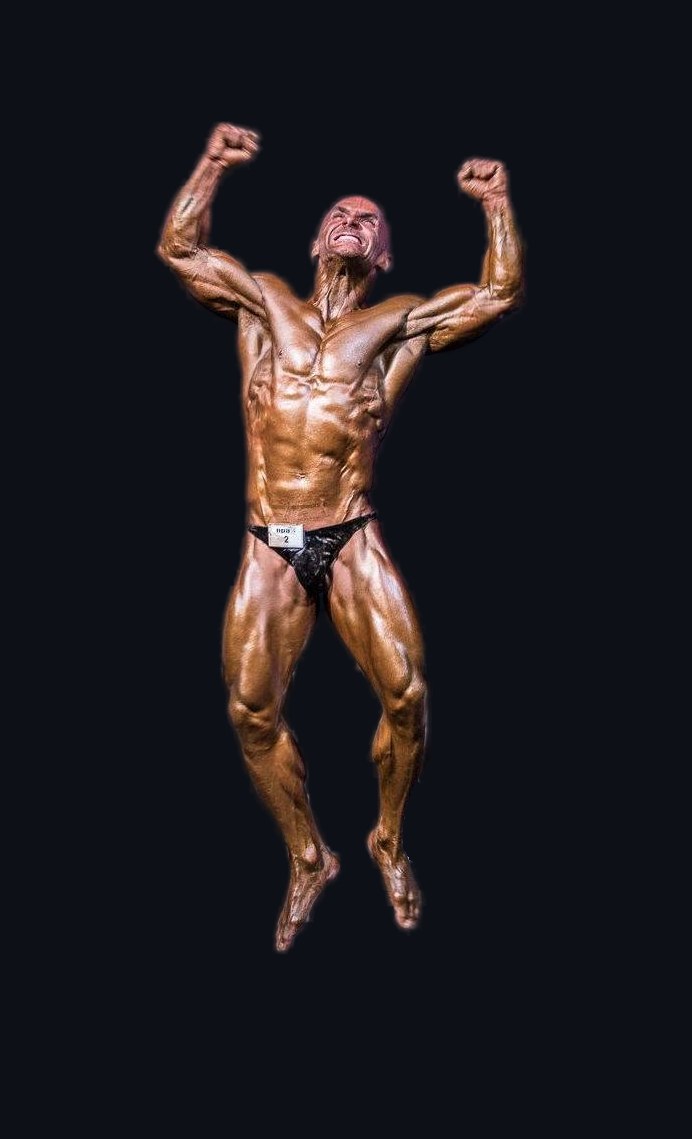
Pete, 53 — A Personal Note
I won’t pretend it’s genetics. I’ve trained hard for a long time — through a world bodybuilding title, through running a busy PT studio, through everything midlife throws at you. The thing that’s kept the wheels on isn’t a fancy programme. It’s the same handful of basics, done consistently for decades.
If you want the honest version of what I do at 53, it’s less exciting than the internet would like:
- I lift 4–5 times a week. Most sessions are 45–60 minutes. Compound movements first — squats, presses, pulls, hinges — then isolation work for the bits that need it.
- I lift challengingly, not stupidly. The ego stuff is long behind me. I push hard, take the last rep where it should be — but I prioritise form, joints and longevity over the heaviest possible single.
- I eat enough protein. Around 1.6–2.2 g per kg of bodyweight a day. This becomes more important, not less, as you age — older bodies need more protein to maintain muscle.
- I move every day. Walking, cardio, getting outside — lifting is the engine but daily movement is the oil.
- I sleep like it’s my job. Muscle is built between sessions, and cognition, mood and hormones all follow your sleep.
- I don’t drink much. A pint or two occasionally, nothing routine. Alcohol is an unbelievably hard drag on body composition and recovery in midlife.
- I track the basics. Bodyweight, training intensity, how I look in the mirror, how I feel in clothes. Nothing obsessive — just enough to spot drift before it becomes a problem.
That’s it. No magic. No drugs. Just the same compounding fundamentals applied for long enough that the results are big.
Lifting Weights Through Perimenopause and Menopause
If you’re a woman in your 40s or 50s reading this, please don’t skip this section. As oestrogen drops, women face a perfect storm: muscle is lost faster, bone density falls sharply, fat redistributes to the middle, metabolism slows, and mood and sleep often take a hit. Lifting pushes back against every single one of those at once. Cardio alone doesn’t do this. Walking doesn’t do this. Yoga doesn’t do this.
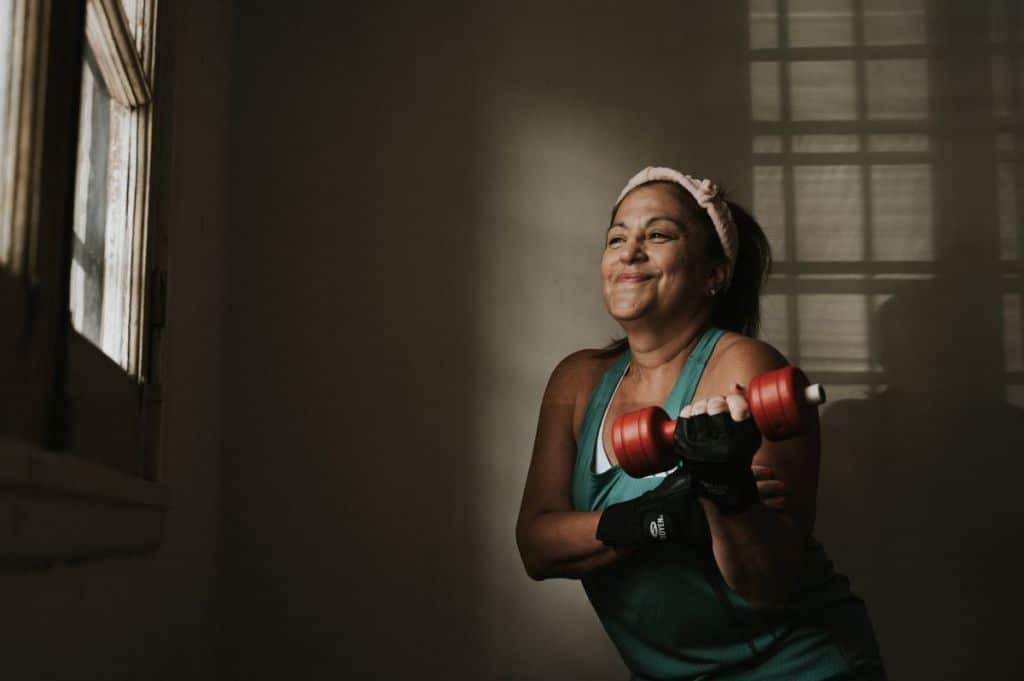
- Protects bone. Resistance and impact training is one of the few interventions proven to maintain and even improve bone density in postmenopausal women.
- Preserves muscle and metabolism. Far more effective than cardio for managing body composition through the transition.
- Helps with the symptoms. Lifters report better sleep, steadier mood and more energy through perimenopause and beyond.
- Sits beautifully alongside HRT. Whether you choose HRT or not, lifting amplifies what your hormones are doing for bone, muscle and metabolic health.
If this is you, my menopause coaching page walks through how I support women specifically through this stage.
How to Start Lifting in Your 40s or 50s
If you’ve never lifted, or you used to and stopped, here’s the no-nonsense framework I give every new client your age:
The midlife strength blueprint
- Train 2–4 times a week. Two well-run full-body sessions a week delivers most of the benefits. Consistency beats intensity.
- Master the big movements. Build everything around a squat, a hinge (deadlift), a push (press), a pull (row) and a carry. These compound lifts give you the most return for the time.
- Progressive overload. The golden rule — gradually add weight, reps or sets over time. Muscle and bone only adapt when you keep asking a little more of them.
- Form first, always. Learn good technique before chasing heavy weight. Get coached early if you can — it’s the single best investment you’ll make in a midlife training career.
- Eat enough protein. 1.6–2.2 g per kg of bodyweight a day. This is non-negotiable after 40.
- Recover properly. Sleep, walking, food. Muscle is built between sessions — don’t train the same muscles into the ground every day.
- Start where you are. Bodyweight, resistance bands, machines or dumbbells — all of it counts. The best programme is the one you actually do.
Mistakes I See People Your Age Making
- Doing more cardio when they should be lifting more. Cardio is great for your heart. It is not how you change your shape, protect your bones or save your metabolism.
- Eating less and less. By 50, most people’s problem isn’t calories — it’s the muscle they’ve lost. Eating more (the right things) and lifting fixes it.
- Going too light, “because of my age.” If you can do 25 reps with it, it’s not training your muscles or your bones. Your body needs a real stimulus.
- Going too heavy, too soon. The other ditch. Ego-lifting in your 50s gets you injured, not strong. Form first.
- Skipping the legs. The biggest, most metabolically active muscles in your body are the ones most people leave alone. Train them.
- Stopping when something twinges. Aches, niggles and the odd off day are part of the deal. Work around them, get coached if needed — but keep showing up.
- Believing it’s too late. The evidence here is overwhelming: 60, 70, even 80-year-olds build measurable muscle and strength when they lift. You’re reading this in your 40s or 50s. You’re early, not late.
Busting The Midlife Lifting Myths
FACT: The science is unambiguous — people in their 80s and 90s build measurable muscle and strength when they lift. At 40 or 50 you’re very early in this game.
FACT: Done properly, resistance training strengthens joints, tendons and connective tissue and is used worldwide to treat joint pain, not cause it.
FACT: Women’s hormone profile makes large muscle gains slow and deliberate. Lifting makes most women leaner, firmer and more athletic — not bulky.
FACT: Cardio is good for your heart but does almost nothing for muscle, bone, body composition or independence later in life. You need both — and after 40, lifting is the one most people are missing.
FACT: A pair of adjustable dumbbells or even your own bodyweight is enough to start building real strength at home. Start where you are.
Quick FAQ
I’m in my 50s and have never lifted. Is it safe?
For the vast majority of people, yes — and far safer than not lifting. The risks of staying weak through your 50s and 60s are massive. If you have a specific medical condition, check with your GP, then find a coach who’ll teach you properly.
How quickly will I see results?
Strength gains in the first month — mostly your nervous system getting better at the movements. Visible body composition change in 8–12 weeks of consistent training plus decent protein. Bone density takes longer — 6–12 months of consistent loading.
How heavy is “heavy enough”?
Heavy enough that the last 2–3 reps of a set genuinely feel hard. If you could do another 10 reps, it isn’t training your muscle or your bone. Form first — then weight.
Will it help me lose weight at 50?
It will help you lose fat at 50, which is what you actually want. Lifting plus the right nutrition reshapes the body underneath. The scale moves more slowly — trouser size moves faster.
Do I need a personal trainer?
You don’t need one. But for most people in their 40s and 50s, having someone teach you the movements properly, build a programme around your life, and keep you accountable is the difference between training for six weeks and training for the next 30 years. If that’s you, that’s exactly what I do — 1-2-1 in Leeds or online.
Train With Pete — In Leeds Or Online
If you’re in your 40s or 50s and ready to actually do something about it, that’s what I’m here for. Free no-pressure consultation to talk through what you want and the smartest way to get there.
Book My Free Consultation