
Pete Gawtry Fitness · Biohacking · Updated 2026
What Is Biohacking?
8 evidence-based ways to upgrade your body and brain — no lab coat required.
✓ Reviewed & Updated — June 2026
2026 update: biohacking has exploded since this was first written — wearables, CGMs, red-light panels and cold plunges are everywhere now. The truth hasn’t changed: nail the basics first. Sleep, daylight, protein, strength training and daily walking out-perform any gadget. Use the tech to fine-tune after the foundations are locked in. Everything below still applies.
 Biohacking is just making one change at a time, seeing how your body responds and keeping what genuinely helps.
What Is Biohacking?
Biohacking means changing one thing, checking the result and keeping the bits that help. Start simple, give each change time and pay attention to how you feel. It does not need gadgets or hype. Small changes to food, movement, sleep and routine are usually enough. Now, let’s look at the basics. 8 Ways to Biohack Yourself Today1. Try an elimination diet
If you struggle with food allergies, are having trouble digesting foods, are experiencing skin issues like eczema and acne or find yourself constantly fatigued, it’s probably time to biohack yourself with an elimination diet. An elimination diet sounds scary, but it’s just a short-term eating plan to figure out if the foods you’re eating are playing a role in whatever issues you’re experiencing. Here’s how it works: for 3–4 weeks, you’ll remove foods that are known allergens, giving any inflammation time to go down and giving you a clean slate. Gluten, soy, dairy, peanuts and corn are all foods to cut out during this time. Then, slowly, you’ll re-introduce the banned foods, paying attention to how you feel and how your body responds physically. If you suspect a food you’ve added back into your diet is an irritant, you’ll remove it again and see if symptoms clear up. The goal is to pinpoint whether you’re less tolerant of some foods than others, and then make informed decisions about what you’re eating. For instance, if it turns out you don’t respond well to cow’s milk, you might want to use coconut milk in your coffee or try goat cheese as part of a dairy-free diet. An elimination diet is one of the best biohacks you can do for yourself. Some people don’t understand how good they can truly feel until they remove some of the worst food offenders from their diet.2. Kick sugar to the curb
I never said this would be easy! Giving addictive sugar the boot is one of the best things you can do for your overall health. It can be a pretty tough biohack, but one of the most rewarding. Now, I don’t mean you have to eliminate naturally occurring sugars, like the ones you find in fruits and dairy, from your diet. Added sugars are the ones you want to worry about. You’ll find those in products like soft drinks, processed foods and sweets, but also in foods like flavored yogurt, condiments (check those barbecue sauce and ketchup labels!) and energy drinks. What makes sugar so bad for your body? It increases your risk of type 2 diabetes, it leads to mood swings, it increases inflammation in the body and lowers energy — and that’s the abbreviated list! (Read more about the benefits of a sugar-free diet.) How to reduce your sugar habit? Learn how to measure sugar, look for it in all its forms on labels (hint: anything ending in “ose” and natural sweeteners like honey, molasses and fruit juice still count) and limit processed foods.3. Change when you’re eating
Did you know that by simply changing when you’re eating, you can biohack your body? Intermittent fasting is gaining popularity as a method of losing weight and normalizing insulin sensitivity, which can help prevent chronic diseases like diabetes. It also regulates ghrelin levels, more commonly known as the hunger hormone, which tells your brain when you’re hungry, and leptin, which signals to the brain that you’re full and should stop eating. The cool thing about fasting is that there is more than one way to do it. Some people opt for alternate-day fasting, where on fasting days, you limit your calories to 25 percent of your normal intake, and then eat your usual amount of calories on non-fasting days. There’s time-restricted eating, where you only eating during a certain window during the day (psst: if you eat dinner early and tend to have a late breakfast, you’re already doing this!) and a more spiritual approach, the Daniel fast. Though intermittent fasting can take some time to get used to, depending on your health goals, it may be a good biohacking option.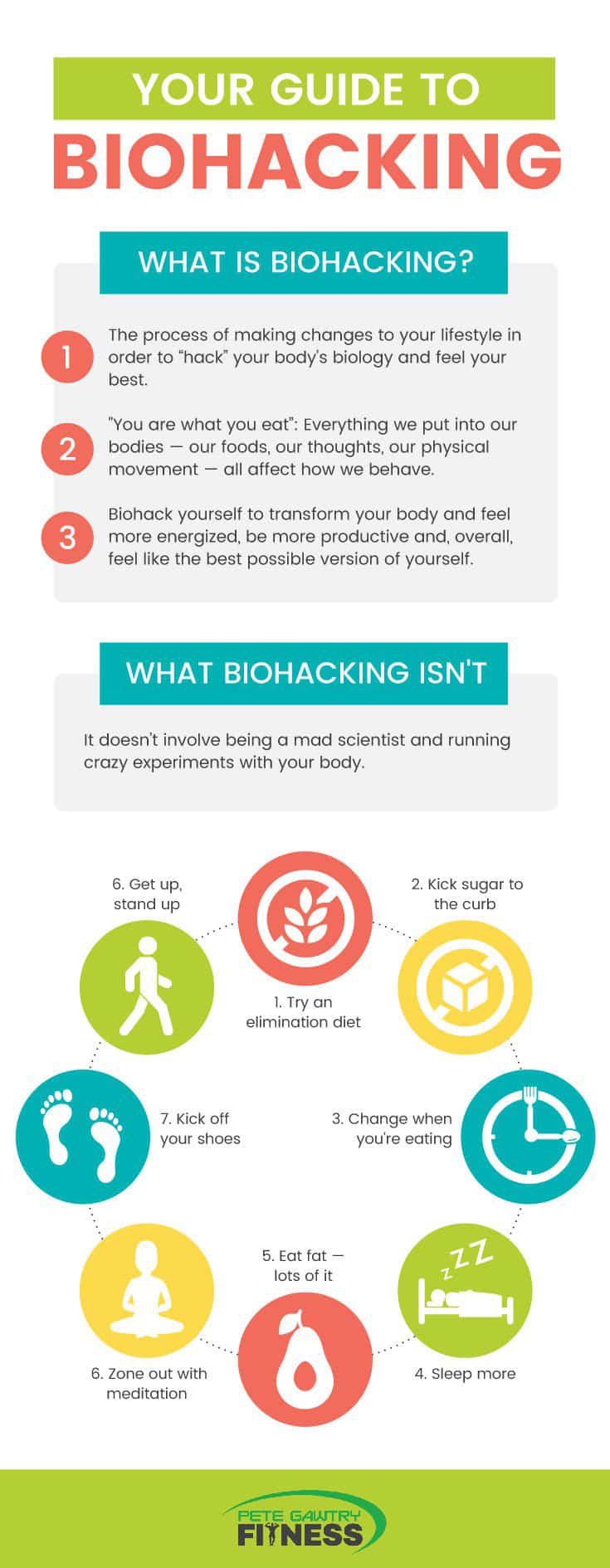
4. Sleep more
Sleep is often missing from conversations about losing weight and improving your health and mood — and that’s a major mistake. If you’re not getting enough zzz’s each night (usually between 7–9 hours) and suffering from sleep deprivation, you’re putting yourself at risk for a host of health problems, including a higher risk for chronic disease, a weakened immune system, depression, trouble concentrating, irritability, an increased appetite and out-of-whack hormones. The simplest sleep biohack is boring but effective: get more of it. Keep a regular sleep schedule, even on weekends, and give the change a few weeks before you judge it. Keeping electronics out of bed is important, too; the lights from your smartphone tell your brain it’s time to wake up, not drift off to sleep. If you’re still struggling from insomnia, a DIY essential oils sleep aid just might do the trick.5. Eat fat — lots of it
Looking for a diet where eating a lot of fat isn’t just encouraged, it’s required? The keto diet might be for you! While the keto diet is experiencing some serious popularity right now, it’s not a fad diet. In the keto diet, you’re trying to get your body to ketosis (“keto”), a metabolic state where the body uses mostly ketones, not carbohydrates, for energy. This can only happen when fat, not glucose (carbohydrates), provide most of body’s calories. On a keto diet, you’ll seriously restrict carbs and sugar, and instead eat keto-friendly foods like healthy fats (coconut oil, ghee, nuts, etc.), non-starchy veggies (goodbye, potatoes) and foods that are high in protein but have no or low carbs, like grass-fed beef, wild-caught fish and eggs. The keto diet is very effective at promoting weight loss, especially if you are very overweight. It can reduce heart disease markers like high cholesterol and could even fight brain disease — in fact, the keto diet was originally used as a way to manage seizures in people with epilepsy. If you’re already eating relatively well but want to challenge yourself even further, biohacking your diet and going keto could be what you need.6. Zone out with meditation
What we feed our minds is just as important as what we feed our bodies. Meditation is the ultimate brain hack. The benefits of meditation are huge: from reducing pain and increasing sleep quality to lowering inflammation and boosting productivity. If you’re suffering from stress or anxiety, meditation can also be a really effective way of naturally dealing with symptoms. Establishing a daily meditation practice is one of the best things you can do for your mental and physical health. If you concerned that you can’t stop your brain from buzzing long enough to meditate, don’t worry. Guided meditation can help you get into the habit. There are also dozens of smartphone apps you can use; some will alert you at the same time each day or have specific meditations for different purposes, like starting the day with a clear head or helping you unwind. Healing prayer is another option that might speak to you.7. Kick off your shoes
How often do you walk barefoot in the grass or feel the sand crunch between your toes? If the answer is “not enough,” may I suggest you introduce grounding as your next biohack? Grounding, also known as earthing, means allowing your feet to connect with the surface below them and the powerful energy that brings. When we spend time barefoot on the earth, our feet act as electrical currents, allowing the natural electrical charges that the earth produces flow through us. Grounding can improve your sleep, reduce inflammation and encourage you to enjoy nature more and get your dose of vitamin D — plus, it’s free! Try it by taking a short walk sans shoes to the mailbox, strolling on the beach or even barbecuing barefoot. As the weather gets colder, minimalist shoes can help keep your feet in closer contact with the earth.8. Get up, stand up
Most of us spend our days going from sitting in our cars to sitting at a desk to sitting in the car some more. Rinse and repeat, and we’re spending an extraordinary amount of our lives seated. All that sitting is harming our health, and might even be as dangerous as smoking. But there’s an easy fix to that: stand more. You don’t need to invest in a standing desk (although they’re helpful!). Instead, it’s how often we stand, not how long we stand for, that matters. Biohack your way to better health simply by getting up and talking to colleagues instead of sending an email; taking the stairs instead of the elevator; standing up and pacing during long phone calls or even setting a reminder on your phone for every 60–90 minutes to take a quick lap around the office.Final Thoughts
- What is biohacking? It is making small changes and paying attention to what actually helps.
- You do not need fancy gadgets to start; the basics usually do most of the work.
- Useful biohacks include adjusting food, moving more, sleeping better and experimenting carefully with fasting.
- Keep the helpful bits and leave the hype.
Build a body that lasts
Training, nutrition and recovery coaching for the long game — not just the next six weeks.
Start Online Coaching →Ready to take it further?
Work with Pete Gawtry
Want to actually shift body fat and feel better? Pete builds the training and nutrition around your life.
Personal Training in Leeds →A Meal Plan tailored to you →