
Exercise Snacking: Do 1-5 Minute Bursts Actually Count?
The “exercise snacking” trend has racked up more than 122 million views online, promising results in bursts as short as one minute. Here’s what the evidence actually supports, and what it doesn’t, for anyone with a packed diary.
I’ve had more questions about exercise snacking in the last few months than almost anything else I coach on. If you’ve spent any time on TikTok or Instagram lately you’ll have seen it, someone doing squats by the kettle, calf raises at their desk, a minute of marching on the spot between calls. My honest answer sits somewhere between the hype video and the cynical comment underneath it, which is roughly the same place I landed in The Truth About Reformer Pilates.
What Exercise Snacking Is
The definition researchers use is fairly precise. An exercise snack is a short burst of moderate to vigorous movement, usually somewhere between one and five minutes, repeated several times across the day rather than done in one block. Instead of one 45 minute session, you might do a minute of squats before your first coffee, a fast lap of the stairs after lunch, and a set of wall sits before you leave the office.
It’s easily one of the biggest wellness trends of 2026, and it’s genuinely viral rather than just visible. The trend tag alone has pulled in more than 122 million views across TikTok, YouTube Shorts and Instagram Reels combined. That’s a lot of people who wouldn’t call themselves “into fitness,” trying something because it fits into a day that’s already full.
What The Research Shows
I want to be straight about this bit, because it’s easy to either write the whole thing off as nonsense or oversell it as a miracle, and neither is honest. The research behind exercise snacking is described as moderate-certainty evidence. That means the findings are real and consistent enough to act on, but it isn’t the kind of overwhelming, settled evidence you get from something that’s been studied for fifty years across huge populations.
People who build in these short bursts see real, measurable improvements in cardiorespiratory fitness, which is really just how efficiently your heart and lungs get oxygen around your body. There are statistically significant improvements in blood pressure too, both systolic and diastolic, the top and bottom numbers. Breaking up long periods of sitting with a minute or two of movement also softens that flat, foggy feeling a lot of people get by mid-afternoon, the one usually blamed on lunch or low blood sugar when it’s often just too many hours sat still. And some of the research has picked up a small but real increase in lean muscle tissue. Small is the operative word. It’s not nothing, but it’s not going to replace a training programme.
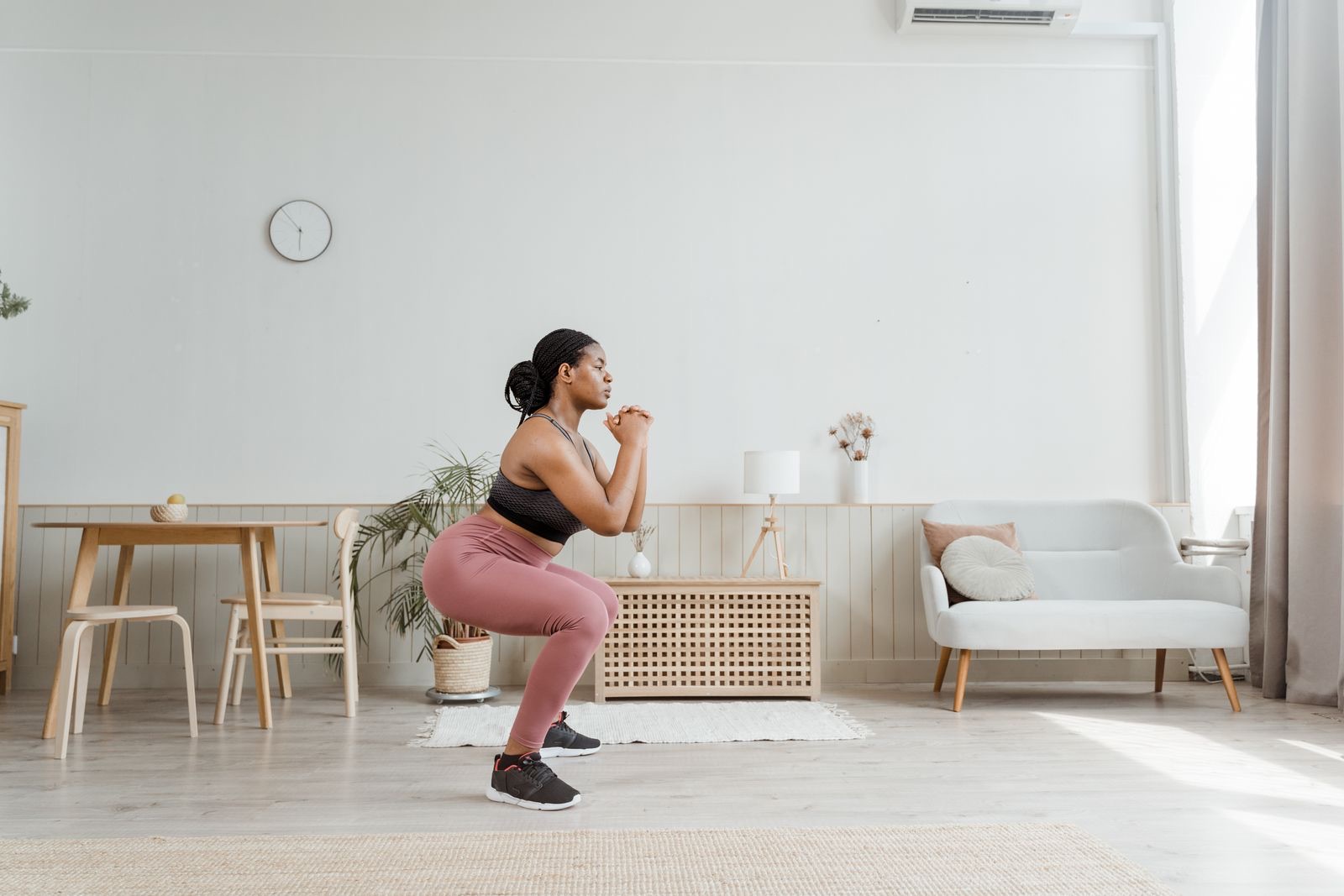
I see the energy piece play out constantly. A client of mine works long, desk-based hours, back to back meetings most days, and for a stretch last year she could only get to one session with me a week instead of her usual two. Rather than write off the other days completely, we built in a few short snacks between meetings: a minute of squats before a call, some marching on the spot while the kettle boiled, the stairs instead of the lift whenever they were an option. Nothing dramatic happened to how she looked. What changed was how her days felt. She stopped hitting the wall at 3pm where she’d previously have gone for a second coffee and a biscuit just to get through the last two hours. That’s not a small thing if you’re the one living it, even if it wouldn’t show up on a set of scales.
What It Won’t Do
Exercise snacking is explicitly not a rapid weight-loss trick, and I’d rather say that plainly than let anyone read between the lines and hope otherwise. If your actual goal is losing fat, or building visible strength and muscle, or training for a specific event, a minute of squats several times a day is not going to get you there on its own. If fat loss specifically is what you’re after, that’s a longer conversation, one I’ve gone into properly in Fat Loss Without Cardio.
It works best as a complement to your broader lifestyle habits and proper structured training, not as a stand-in for either. Think of it as what fills the gaps between your real sessions, not a replacement for them. I would never tell a client to swap a training session for a day of snacks instead. What I would tell them, and do tell them, is that the days you’re not training don’t have to be completely sedentary either. There’s a middle ground between a full session and doing nothing on the sofa.
I had a client who was openly sceptical when I first suggested this to him, and fair enough. His exact words were something like, there’s no way a minute of squats does anything. I didn’t oversell it early on, I told him the honest version straight away. Over a few months of adding snacks on his non-training days, alongside his usual two sessions a week with me, what changed was mostly how he felt day to day: steadier energy, less of that stiff, foggy feeling by mid-afternoon, more inclined to take the stairs without thinking twice about it. What didn’t change much was his strength or how he looked. That only moved when we stayed consistent with the actual training sessions. He still does the snacks now, but because they make an ordinary Tuesday feel better, not because he thinks they’re building him a six pack.
What I’d Actually Do
If you’ve got a properly packed diary, here’s how I’d use this, and roughly how I use bits of it myself on the days I’m not coaching back to back.
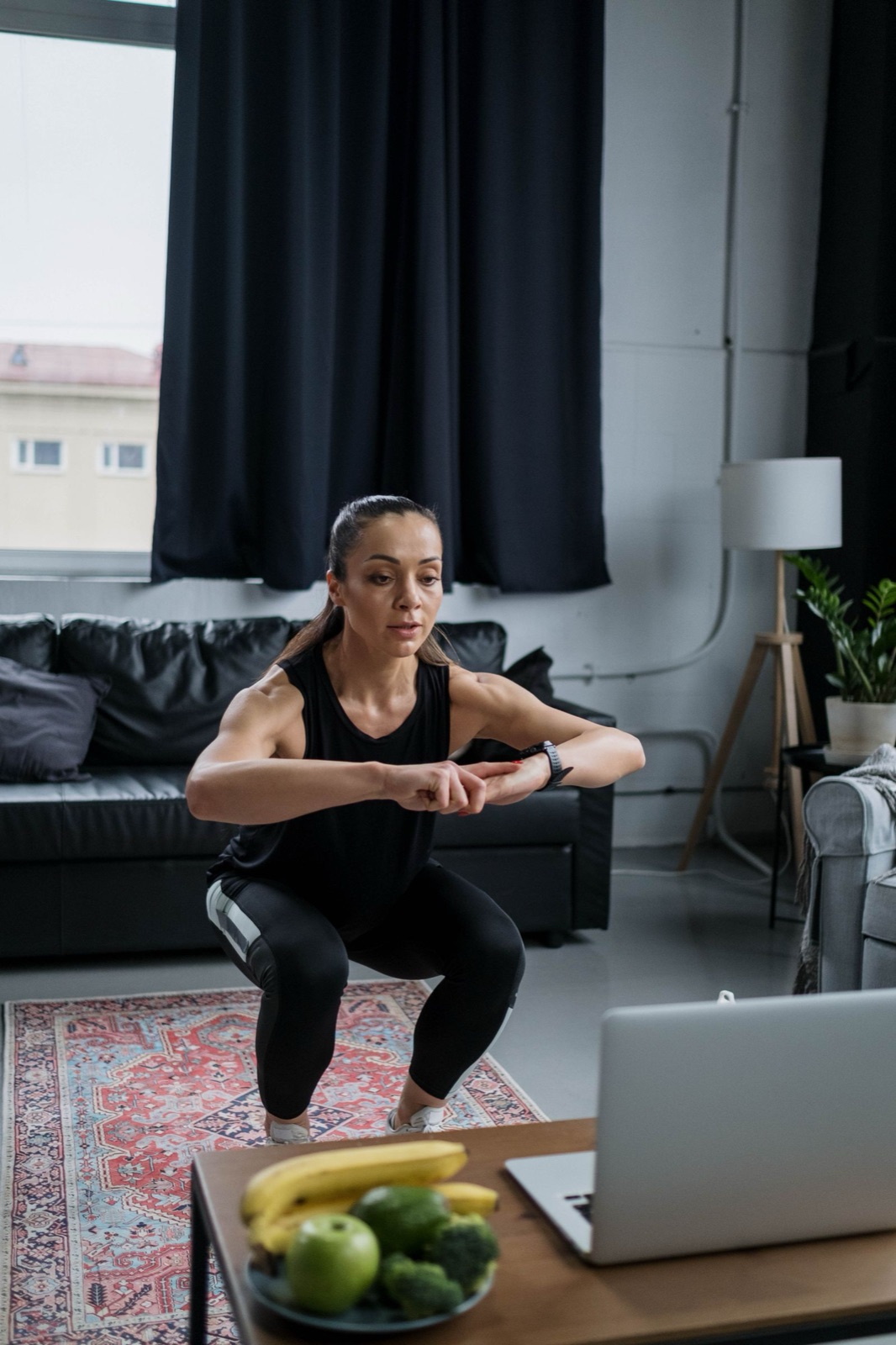
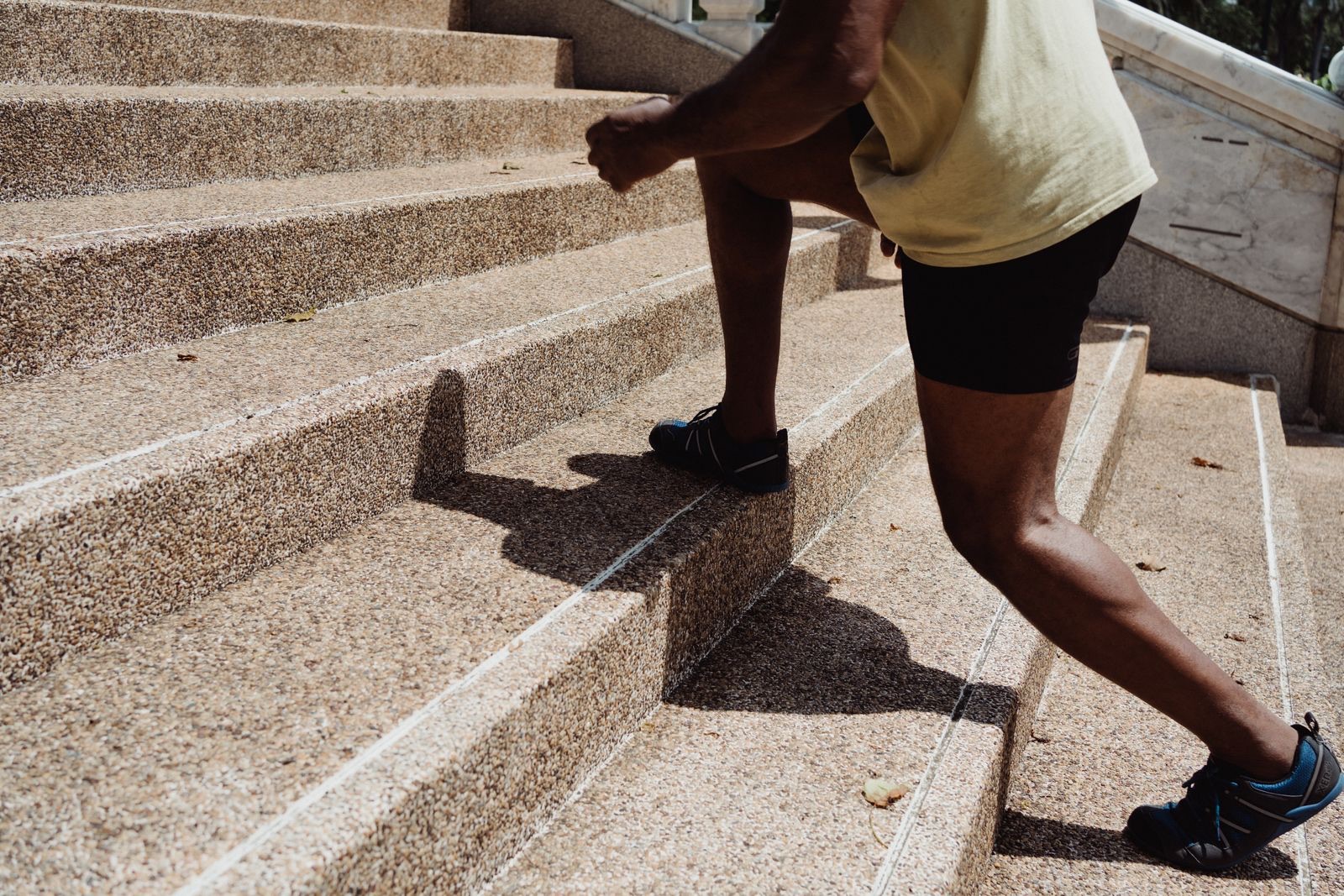
Pick two or three windows in your day and attach the snack to something that already happens, rather than relying on remembering out of nowhere. Before lunch, a minute of bodyweight squats or marching on the spot. After lunch, a single flight of stairs, or two if your building has them, done briskly rather than at a stroll. Mid to late afternoon, when the energy dip usually lands, a set of wall sits or calf raises while the kettle’s on. That’s roughly the pattern most of the research settles on: two to three snacks spread across a working day, not fifteen scattered attempts you’ll never keep track of.
To remember them, don’t rely on willpower. Attach each snack to an existing habit, the same way you’d stack a new habit onto brushing your teeth. Kettle boiling, waiting for a call to connect, walking past the stairwell, putting the bins out, whatever already happens in your day can carry the reminder for you, so you’re not adding “remember to exercise” to an already long list of things to remember.
At home, lunges, high knee marches and a few push-ups against the kitchen counter work well. If you want something with a bit more resistance to it, carrying shopping bags for longer than strictly necessary, a wall sit while you’re on a phone call, or a set of glute bridges in front of the television all count. Outdoors, a single flight of stairs somewhere on your usual route, or a brisk lap of the block instead of a stroll, does the job just as well.
None of this replaces one or two proper structured sessions a week, and I’d never suggest it should. If you want the fuller argument for why two solid sessions can be enough of a foundation on their own, I’ve written about that separately in Do You Really Need To Train Every Day? Exercise snacking is what happens on the days in between those sessions, filling the gaps so they don’t turn into total inactivity.
Quick FAQ
Do exercise snacks help with weight loss?
Not on their own, and the research is explicit that this isn’t a rapid weight-loss method. They can support a broader plan that includes proper training and decent habits, but they’re not a substitute for either.
How many should I do a day?
Most of the research settles on two to three a day, for example one before lunch, one after lunch and one in the late afternoon. More isn’t automatically better if it means you can’t keep it up.
Do they replace my normal training sessions?
No. Treat them as what fills the gaps between sessions, not a replacement for one or two proper structured sessions a week.
What counts as a snack?
Anything moderate to vigorous you can sustain for one to five minutes: squats, marching on the spot, stairs, wall sits, loaded carries, push-ups. None of it needs equipment.
Is this just the 10,000 steps thing again?
Related, but not the same. I’ve written before about why the 10,000 steps figure isn’t the magic number people assume it is. Exercise snacking is more specific than step counting: short bursts of real effort rather than accumulating steps at any pace.
Key Takeaways
- Exercise snacks are short bursts of moderate to vigorous movement, roughly one to five minutes, repeated a few times across the day.
- The evidence is moderate-certainty, not definitive, but it’s real: better cardiorespiratory fitness, improved blood pressure, less of a mid-afternoon energy dip, and a small increase in lean muscle tissue in some studies.
- They are not a rapid weight-loss method and were never meant to be one.
- They work best alongside proper structured training, filling the gaps on the days you’re not in a session, not replacing one or two sessions a week.
- Two to three snacks a day, attached to something you already do, beats a long list you’ll never remember to stick to.
If you want help building something more structured around this rather than figuring it out alone, that’s the kind of thing I work through with clients regularly, whether that’s in person at my studio at Suite 1, Arena Business Park, Tarn Lane, Leeds, LS17 9BF, or through online coaching from £100 a month if Leeds isn’t on your doorstep. There’s no pressure either way. Details on both are on the prices page, and you’re welcome to get in touch if you’d rather talk it through first.
Fill The Gaps, Properly
Exercise snacks are the bit in between. The training itself still needs a real plan behind it. 1-2-1 coaching at the studio in Suite 1, Arena Business Park, Tarn Lane, Leeds, LS17 9BF, or online across the UK. 12 awards, 4× UK’s Best PT.
Book a Free Consultation →