

Fibremaxxing: The One Food Trend Worth Copying
Every year social media picks a nutrient to obsess over. This year it's fibre, and honestly, good. It might be the cheapest fat-loss and health tool you're not using. Here's how to hit 30g a day from a normal supermarket shop, without a week of bloating.
I spend most of my life telling people to ignore food trends. This is the rare one I'll tell you to copy. "Fibremaxxing" is a daft name for a simple idea, eating more fibre, and almost all of us badly need to.
Let me be straight, the way I would in the studio. I'm not interested in whatever the internet is panicking about this week, because most trends are nonsense dressed up to sell you something. But every so often the crowd lands on something genuinely good, and this is one of those times. So I want to take the useful bit, bin the marketing, and show you how to actually do it with a normal shop.
What Fibremaxxing Actually Is
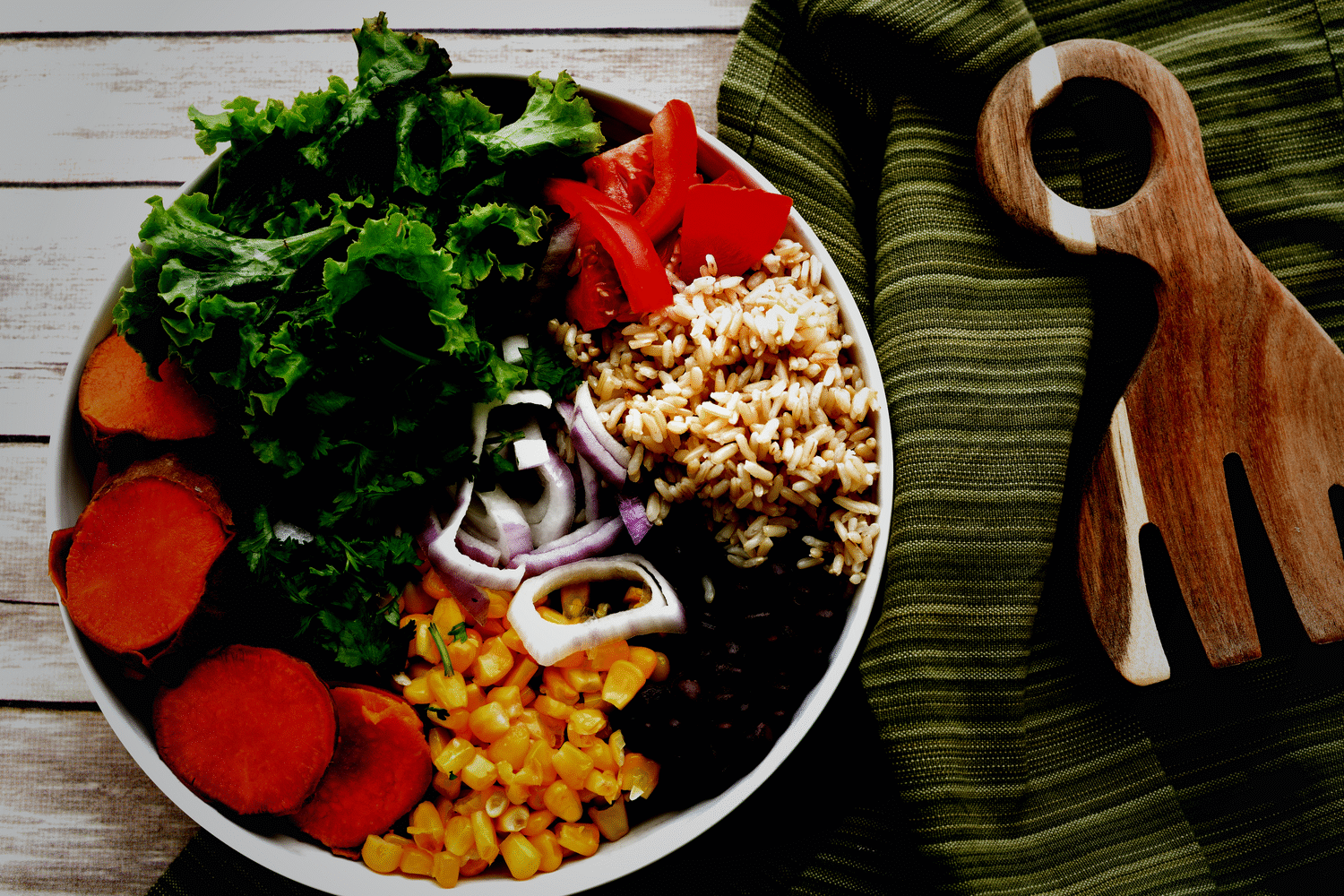
A couple of years ago everyone was protein-obsessed, adding protein to everything and buying protein versions of foods that never needed it. The 2026 version is fibre. Same energy, much healthier target. Fibremaxxing just means deliberately building your meals around high-fibre foods instead of treating fibre as an afterthought.
Here's why it matters, especially in this country. The average Brit gets about 20g of fibre a day. The recommended target is 30g. Depending on which survey you read, only somewhere between 4 and 9% of UK adults actually hit that 30. So nearly all of us are short, by roughly a third, every single day. This is one of the few times a trend is chasing a real problem instead of inventing one.
The Cheapest Fat-Loss Tool Nobody Uses
Fibre isn't a fat burner, and I'd never sell it as one. But for appetite it's brilliant, and appetite is where most diets are won or lost. High-fibre foods are bulky and filling for very few calories. They slow your digestion down so you stay full for longer. And they steady your blood sugar, so you get fewer of those mid-afternoon energy crashes that march you straight to the biscuit tin.
Put those together and something quietly useful happens: you eat more fibre, and you end up eating less overall, without white-knuckling it. That's the whole fat-loss mechanism, and it costs pennies. I'd take a proper high-fibre plate over almost any supplement on the shelf for keeping a client full and on track.
Fibre also feeds the good bacteria in your gut, which is where all the "gut health" noise comes from. Here's the thing though: you don't need a £40 powder or a fancy gut-health drink for that. You need beans. The cheap stuff in the cupboard does the job the expensive stuff on Instagram is only pretending to.
Build A 30g Day From A Normal Shop
You don't need powders, bars, or special "high-fibre" products with a mark-up. You can get to 30g on a bog-standard supermarket shop. Here's a day that lands right on it.
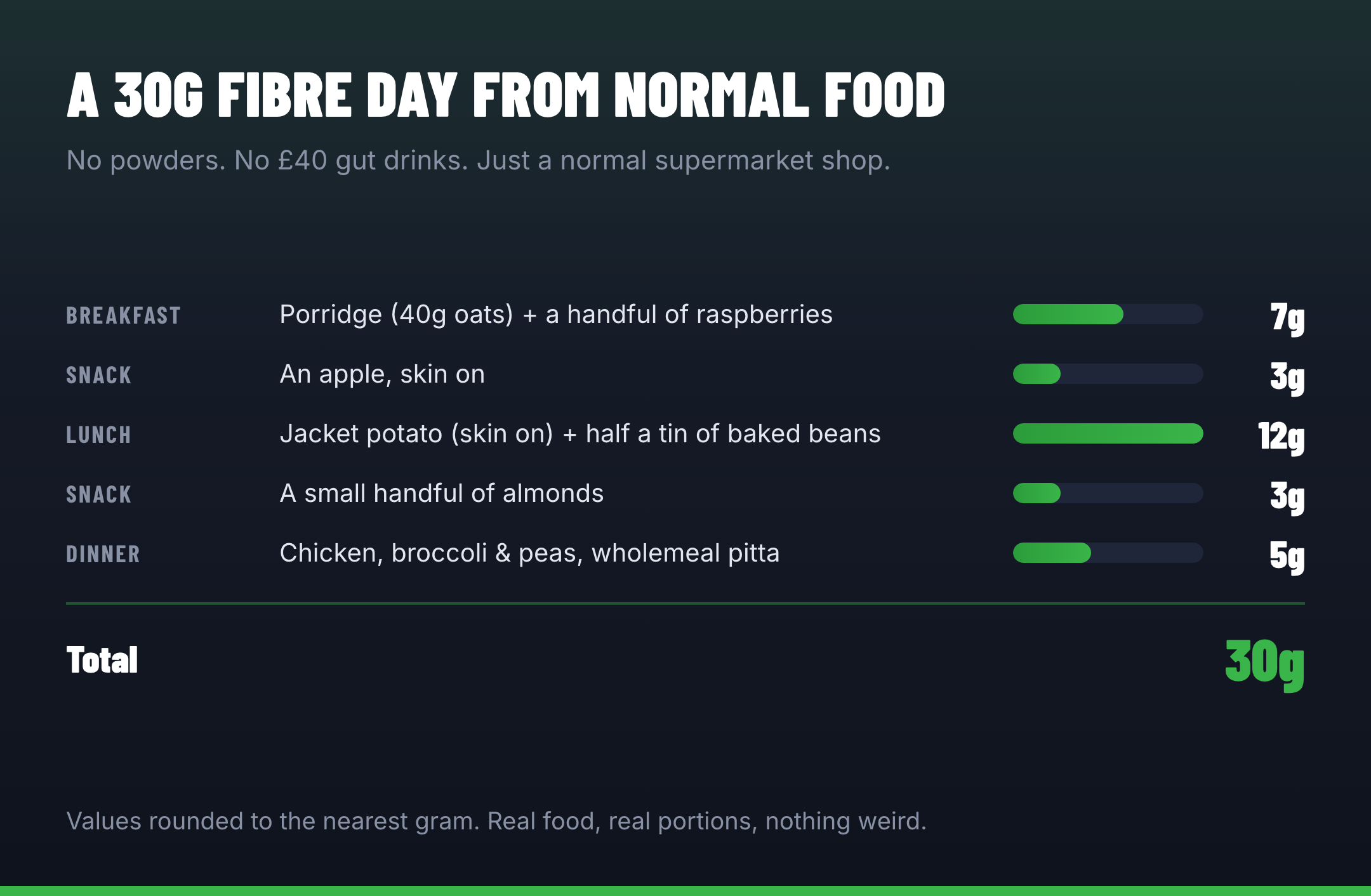
The one to notice there is the jacket potato with baked beans. Beans are the cheat code of this whole thing, a fibre powerhouse for about 40p a tin, and they turn an ordinary lunch into a 12g hit on their own. Keep the skin on the potato and you're most of the way to your daily target from one plate.
The pattern to remember is simple: beans and pulses, wholemeal instead of white, skins left on your potatoes and fruit, oats for breakfast, and a handful of nuts or berries as a snack. Get a couple of those into each meal and 30g stops being a stretch and starts being normal. If you'd rather have it done for you, my free recipe books have the fibre and macros already worked out on every recipe, and my personalised meal plans build your whole week around exactly this.
How To Ramp Up Without The Bloat
Now the honest bit, the part the trend videos skip. If you go from 20g to 30g overnight, you'll be gassy and bloated for a few days, you'll decide fibre doesn't agree with you, and you'll pack it in. I've watched people do it. So let me save you the misery.
That bloating isn't the fibre being bad for you. It's your gut bacteria catching up. Feed them more fibre and they adapt to handle it, but they need a couple of weeks to do it, not a couple of hours. So you ramp it up gently instead of flooring it.
Add roughly 5g a week over about three weeks and you'll barely notice the change. One easy swap the first week, a few servings of beans or lentils the next, and settling at 30g spread across your meals by the third. And drink more water the whole way through. Fibre pulls in water to do its job, and if you skimp on it you can actually end up more bunged up, not less. The water is half the trick.
One caveat: if you've got IBS or another gut condition, go slower still and be a bit careful with the beans and pulses, because some people react to them. It's worth a chat with a dietitian to find the foods that sit well with you.
The five cheat codes
- Beans or lentils most days. The single best move you can make. Cheap, filling, and huge on fibre.
- Wholemeal instead of white. Bread, pasta, rice. Same meal, more fibre, no effort.
- Skins on. Potatoes, apples, pears. A lot of the fibre lives in the skin you're peeling off.
- Oats for breakfast. A bowl of porridge is one of the easiest 4g you'll ever get.
- A handful of nuts, seeds or berries. The snack that actually earns its place.
Fibremaxxing FAQ
What is fibremaxxing?
Fibremaxxing is the 2026 nutrition trend of deliberately eating more fibre by building your meals around high-fibre foods like beans, wholegrains, fruit and veg. It's the fibre equivalent of the protein obsession of a couple of years ago, only aimed at a nutrient most people genuinely fall short on.
How much fibre should I eat a day?
The recommended target for adults is around 30g a day. Most people in the UK get closer to 20g, and only a small minority actually hit 30, so the majority of us are short by about a third. Getting to 30g is the goal of fibremaxxing.
Can eating more fibre help with weight loss?
Indirectly, yes, and it's underrated. Fibre isn't a fat burner, but high-fibre foods are filling for very few calories, slow your digestion and steady your blood sugar, so you naturally tend to eat less without feeling deprived. That makes it one of the cheapest, most effective tools for managing appetite.
How do I get 30g of fibre a day without supplements?
Easily, with normal food. Porridge and berries at breakfast, an apple as a snack, a jacket potato with baked beans at lunch, a handful of almonds, and a dinner with veg and a wholemeal carb will land you at about 30g. Beans, wholegrains and skins-on fruit and veg do the heavy lifting.
Why does more fibre make me bloated, and how do I avoid it?
A sudden jump in fibre gives your gut bacteria more than they're used to, which causes gas and bloating for a few days while they adapt. Avoid it by increasing slowly, roughly 5g a week over three weeks, and by drinking more water. Ramp up gently and the bloating largely doesn't happen.
Do I need a fibre supplement or a gut-health drink?
No. The expensive powders and gut-health drinks are almost never worth it. Real food gives you more fibre for a fraction of the price, along with everything else that comes packaged in it. Half a tin of baked beans costs about 40p and beats most of those products on fibre alone.
What foods are highest in fibre?
Beans, lentils and chickpeas are the standouts, followed by wholegrains like oats and wholemeal bread, then fruit and veg with the skin on, and nuts and seeds. Building meals around those, rather than white bread, white rice and low-fibre snacks, is the whole game.
How long does it take to adjust to more fibre?
About two to three weeks for most people. That's roughly how long your gut bacteria need to adapt to a higher intake. Increase gradually over that time, keep your water up, and the early bloating settles down as your body gets used to it.
The Bottom Line
- Fibremaxxing is the rare food trend worth copying, because most of us are genuinely short on fibre, getting about 20g against a 30g target.
- Fibre is the cheapest appetite tool going. It keeps you full for few calories, steadies your blood sugar, and quietly helps you eat less without trying.
- You can hit 30g from a normal supermarket shop. Beans, wholegrains, oats, and skins-on fruit and veg do the work. No powders, no £40 drinks.
- Ramp up slowly, about 5g a week over three weeks, and drink more water, or you'll spend a week bloated and blame the fibre.
- If you've got a gut condition, go slower and get some tailored advice, but for most people this is one of the simplest wins in nutrition.
Disclaimer: This article is general education, not medical advice. If you have IBS, a diagnosed gut condition, or any concerns about changing your diet, speak to your GP or a registered dietitian before making big changes.
Sources & further reading
- NHS, "How to get more fibre into your diet" and the 30g daily recommendation.
- Scientific Advisory Committee on Nutrition (SACN), UK dietary fibre recommendation.
- National Diet and Nutrition Survey, average UK fibre intake.
Want it all planned for you?
A personalised meal plan built around real, high-fibre food you'll actually enjoy, from an award-winning Leeds personal trainer. No powders, no faff, just a week that works.
Get Your Meal Plan →